
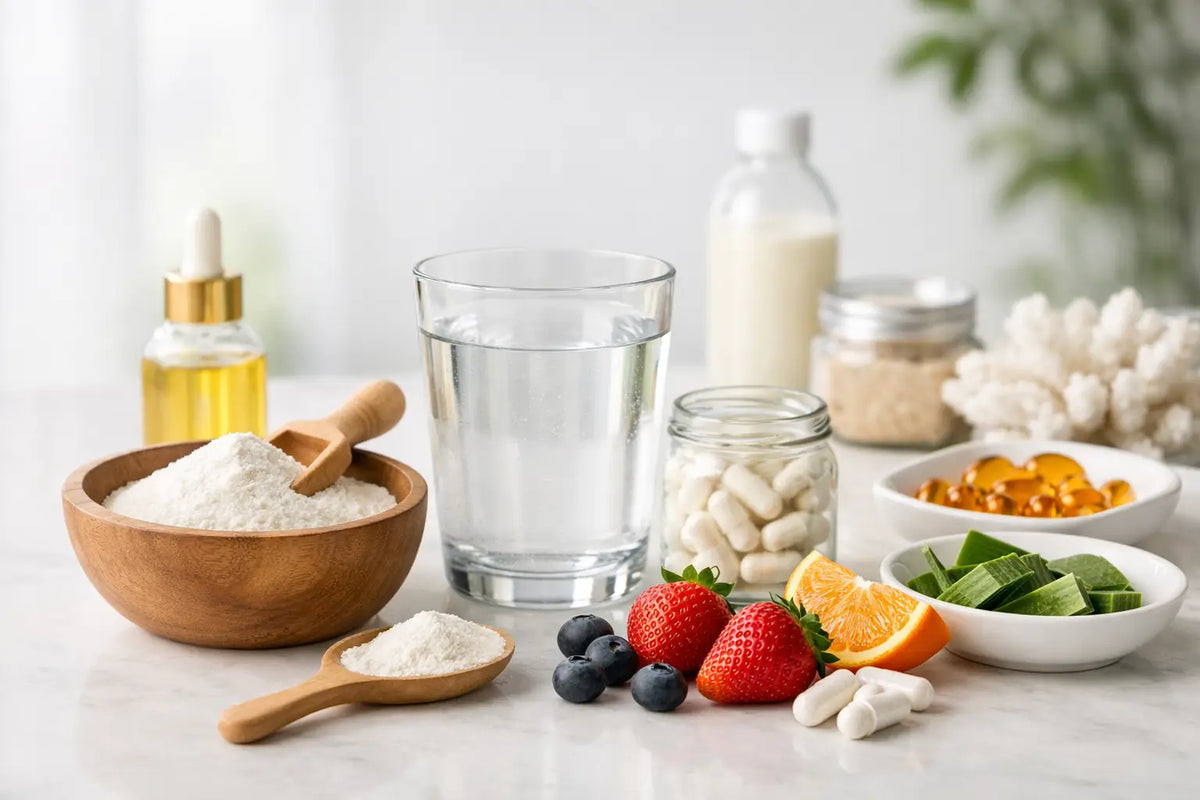
A collagen scoop added to coffee is easy. Building the few habits that help it fit into a skin-supporting routine is where real-life results happen. If you want to support collagen absorption, start with one helpful truth: your body does not absorb collagen as whole collagen fibers. It digests collagen protein into amino acids and small peptides, then uses those building blocks where they are needed.
That may sound less glamorous than a beauty promise, but it is good news. You do not need a perfect routine or a cabinet full of supplements. You need consistent protein, enough key nutrients, and a few daily choices that protect the collagen your body already has. Think of this as a calm, practical reset for your skin-from-within habits.
What collagen absorption really means
When you eat collagen-rich foods or take a collagen peptide supplement, digestive enzymes break the protein down. Some small collagen peptides may enter circulation, while the rest becomes amino acids your body can use to make proteins, including collagen.
So, when people talk about improving collagen absorption, they are often referring to three connected goals: digesting protein comfortably, giving the body enough raw materials to make collagen, and reducing the lifestyle factors that break collagen down faster. A powder cannot force results on its own. Your overall routine matters.
Collagen is especially rich in glycine, proline, and hydroxyproline. These are useful building blocks, but collagen is not a complete protein because it is low in or missing some essential amino acids. That is why it works best as an addition to a balanced diet, not as a replacement for a protein-rich breakfast or lunch.
5 practical ways to support collagen absorption
1. Make consistency easier than perfection
Whether collagen peptides are taken in the morning smoothie, stirred into oatmeal, or mixed into an afternoon drink, the best time is usually the time you can repeat. Most unflavored collagen peptide powders mix well into warm or cold foods, and timing is unlikely to matter as much as steady use.
If coffee on an empty stomach makes you nauseated or jittery, take it with breakfast instead. A routine that feels good enough to keep is more valuable than a complicated wellness plan that creates another task to manage.
2. Pair your collagen habit with vitamin C
Vitamin C does not magically pull more collagen through the gut. Its bigger role is helping your body synthesize collagen after proteins have been digested and absorbed. Without enough vitamin C, the body cannot form and stabilize collagen normally.
You can keep this simple. Add berries or citrus to breakfast, enjoy bell peppers with lunch, or include broccoli, kiwi, tomatoes, or potatoes somewhere in your day. You do not need to combine collagen and vitamin C in the exact same bite. Getting enough vitamin C consistently is what counts.
A quick example: collagen in yogurt with berries, or collagen in a smoothie with frozen fruit, gives you an easy beauty routine without extra planning. If you prefer a savory breakfast, eggs with fruit on the side works too.
3. Eat enough total protein
Collagen can be a useful protein boost, but your skin, hair, muscles, and connective tissues also need the full range of essential amino acids found in foods like fish, poultry, eggs, dairy, soy, beans, lentils, tofu, and lean meats.
This is where busy days can quietly work against your goals. Coffee and a pastry may get you out the door, but they do not give your body much to work with. Aim to anchor meals with a satisfying protein source, especially at breakfast and lunch. Stable meals can also support energy and reduce the late-afternoon snack spiral that leaves many people feeling out of control.
If you eat plant-based, collagen supplements are generally animal-derived, though vegan products may provide nutrients intended to support the body’s own collagen production. Either way, prioritizing varied plant proteins and vitamin C-rich produce is a strong foundation.
4. Support digestion without overcomplicating it
Healthy digestion helps you use the nutrients you eat, but you do not need a dramatic cleanse to make that happen. Regular meals, adequate fluids, fiber-rich foods, and enough movement support the basics for most people.
Try not to introduce several new supplements at once. If you are testing collagen, use it consistently for a couple of weeks and pay attention to how you feel. Some people notice bloating, fullness, or an unpleasant aftertaste with certain products or larger servings. Reducing the serving size, taking it with food, or trying a different format may help.
If you have ongoing digestive symptoms, a diagnosed gastrointestinal condition, food allergies, or a history of kidney disease, check with a qualified clinician before making collagen supplements part of your routine. The goal is to feel better, not to push through discomfort for the sake of a trend.
5. Protect the collagen you have
Collagen support is not only about what you add. Sun exposure, smoking, chronic poor sleep, and consistently high alcohol intake can contribute to collagen breakdown or interfere with the conditions skin needs to function well.
Daily sunscreen is one of the most practical skin-aging habits available. It may not have the excitement of a new supplement, but protecting skin from ultraviolet exposure can make a meaningful difference over time. Sleep matters too. A stressful week will happen, especially when you are balancing work, caregiving, hormones, and a full mental load. Rather than chasing perfect sleep, build a small wind-down cue that helps your nervous system shift gears: dimmer lights, a shower, five minutes of journaling, or a phone-free cup of tea.
This is the bigger reset: collagen routines work best when they sit inside a life that gives your body room to recover.
Choosing a collagen supplement with a clear head
Most supplements marketed for beauty use hydrolyzed collagen, also called collagen peptides. Hydrolyzed means the protein has been broken into smaller pieces, which dissolve more easily and are designed to be easier to digest. Marine collagen is usually sourced from fish, while bovine collagen comes from cattle. The “best” choice depends on your dietary preferences, allergies, budget, and what you will actually use consistently.
Look for a product with a straightforward ingredient list and a stated collagen amount per serving. If a flavored powder contains lots of added sugar or ingredients you do not tolerate well, it may not be the most practical daily option. Third-party quality testing can offer extra reassurance, though it does not guarantee a specific beauty outcome.
Be cautious with dramatic promises. Research on collagen peptides suggests potential benefits for skin hydration and elasticity for some people, but results vary. Skin changes are gradual, and they are influenced by age, sun exposure, hormones, genetics, diet, stress, skincare, and overall health. Give any consistent routine time, and measure success by how you feel and what is sustainable for you, not by overnight before-and-after expectations.
A low-effort collagen routine for busy weeks
Pick one daily cue you already have: making coffee, packing lunch, or cleaning up after dinner. Keep your collagen supplement where that cue happens, then pair it with a vitamin C-containing food at some point during the day. Build protein into your next meal, fill a water bottle, and put sunscreen where you will see it in the morning.
That is enough to begin. NATFUL believes wellness should help you feel more supported, not more scheduled. Your most effective routine is not the one with the most steps. It is the one that brings you back to feeling steady, nourished, and a little more in control.

Leave a comment
This site is protected by hCaptcha and the hCaptcha Privacy Policy and Terms of Service apply.