
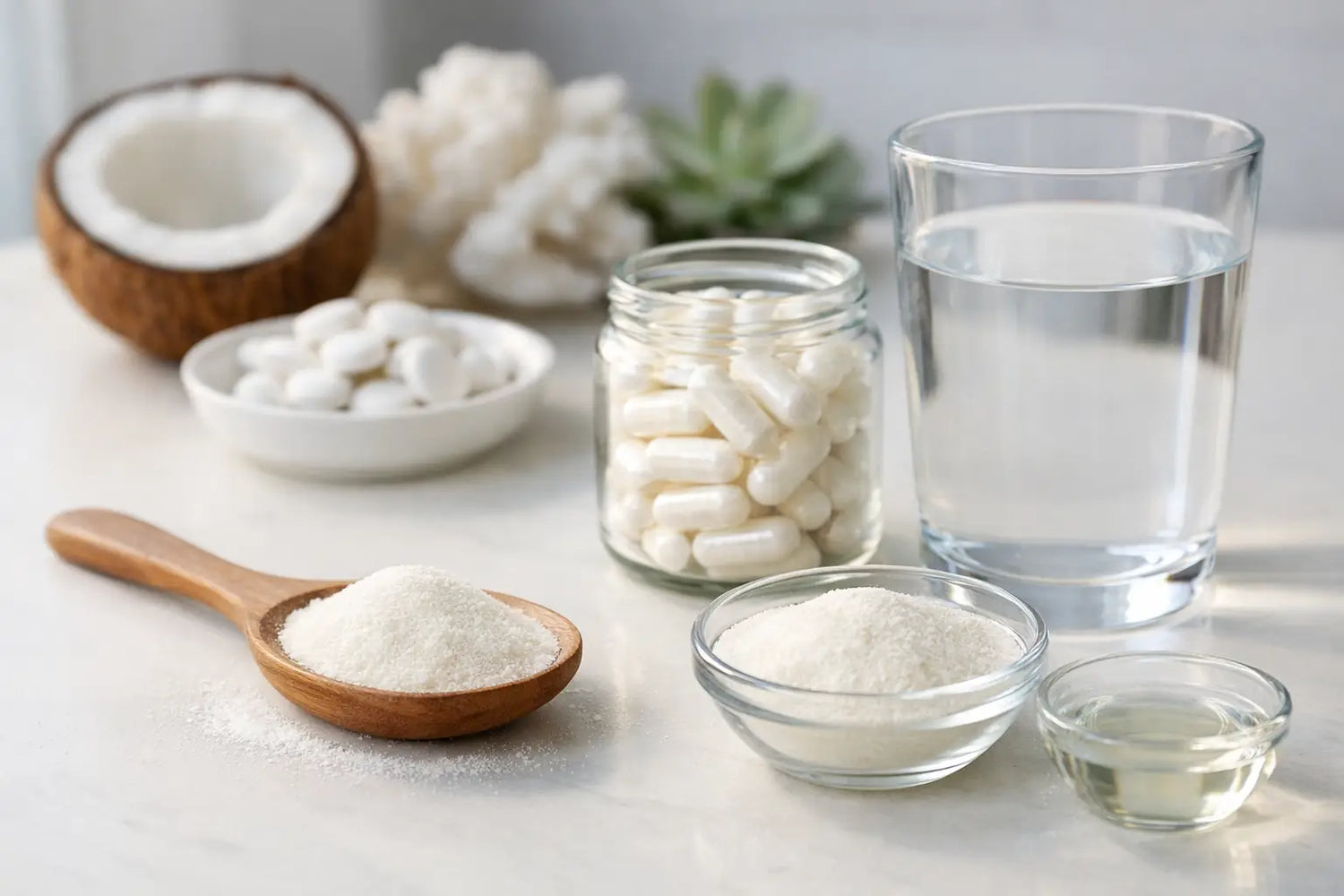
A collagen routine should make your day feel easier, not give you one more wellness task to overthink. This beginner guide to collagen supplementation helps you sort through what collagen can realistically do, which format may suit your lifestyle, and how to build a habit you can actually keep.
Collagen is often marketed with flawless-skin promises, but the most helpful approach is simpler: think of it as one supportive piece of your bigger wellness routine. Hydration, protein, sleep, stress support, and consistent meals still matter. A quality collagen supplement may complement those foundations, especially if you want a practical beauty-from-within ritual.
What Collagen Actually Does
Collagen is the most abundant protein in the body. It helps provide structure to skin, bones, tendons, ligaments, cartilage, and other connective tissues. Your body makes collagen from amino acids found in protein-rich foods, with help from nutrients such as vitamin C.
Natural collagen production changes over time. Aging is part of that picture, but so are sun exposure, smoking, chronic stress, inadequate sleep, and a diet that consistently falls short on protein. This is one reason skin can gradually feel less bouncy or hydrated, while nails may become more prone to splitting.
Collagen supplements contain collagen that has been broken into smaller peptides, also called hydrolyzed collagen. These peptides are easier to dissolve and digest than whole collagen proteins. After digestion, the body uses the amino acids and peptides where they are needed. That does not mean a scoop of collagen goes directly to your cheeks or hair follicles. It means you are giving your body building blocks that may support its normal processes.
Research on collagen peptides is promising, particularly for skin hydration and elasticity, and some people also use them to support joint comfort and nail strength. Results vary. Your starting diet, age, genetics, sun exposure, overall health, and consistency all influence what you notice.
Beginner Guide to Collagen Supplementation: Set Realistic Goals
Start by choosing one or two outcomes you care about. Maybe you want to support skin hydration during a stressful season. Maybe your nails feel fragile, or you want a small recovery ritual after workouts. A clear goal helps you choose a product and notice whether the routine is worth continuing.
Avoid expecting overnight changes. Skin turnover takes time, and visible results from collagen are usually gradual. Many studies assess outcomes over roughly 8 to 12 weeks of daily use. Take a simple baseline photo in similar lighting if skin is your focus, or jot down how often your nails break. You are looking for real-life changes, not perfection.
Also remember that collagen is not a replacement for medical care. New joint pain, major hair shedding, sudden skin changes, or persistent digestive symptoms deserve a conversation with a qualified health professional. Sometimes the issue is not a lack of collagen at all.
Know the Main Types and Sources
You do not need to memorize every collagen type to get started. What matters most is choosing a source that fits your diet, preferences, and goals.
Bovine collagen, typically sourced from cows, commonly provides types I and III. These are the types most often associated with skin, hair, nails, bones, and connective tissue support. It is widely available in powders and is often a budget-friendly option.
Marine collagen is sourced from fish and is largely type I collagen. It is popular for beauty-focused routines, though it is not automatically more effective for everyone. It can cost more, and it is not suitable for anyone with a fish allergy.
Chicken collagen is often associated with type II collagen, which is commonly discussed for cartilage and joint support. It may be offered in a different form and dosage than standard collagen peptide powders, so follow the product label rather than assuming all collagen works the same way.
If you are vegan, collagen itself is not vegan because it comes from animal sources. Some plant-based products are marketed as “collagen boosters.” They may provide nutrients that support the body’s own collagen production, but they do not contain collagen peptides. That distinction matters when you are comparing labels and expectations.
How to Choose a Supplement Without the Overwhelm
A straightforward collagen peptide powder is often the easiest place to begin. Look for a product that clearly lists its collagen source, serving size, and ingredients. If you prefer fewer decisions, unflavored powder can disappear into coffee, smoothies, oatmeal, yogurt, or soup.
Flavor is not a minor detail if it determines whether you use the product. If you dislike plain powders, a flavored option may help you stay consistent. Just check the label for added sugars, sweeteners, or ingredients that do not work for your body. Gummies can feel convenient, but compare the collagen amount per serving. Some contain far less collagen than powder products.
Third-party testing can add confidence, particularly for a supplement you plan to take daily. Look for brands that are transparent about quality testing and avoid products that rely on dramatic before-and-after claims. More ingredients do not always mean better results. A simple formula is often easier to tolerate and easier to evaluate.
Dosage depends on the type and intended use, but many collagen peptide products provide around 2.5 to 10 grams per day. Your product label is the best starting point. Taking more than recommended is unlikely to create faster results and may only make the container disappear sooner.
Build a Routine That Survives Busy Days
The best time to take collagen is the time you will remember. You do not need to take it on an empty stomach, before a workout, or at a precisely timed hour for it to count. Pair it with a habit that already happens most days.
Try one of these simple anchors:
- Add unflavored collagen to your morning coffee, tea, or smoothie.
- Stir it into breakfast oatmeal or yogurt.
- Keep single servings at your desk for an afternoon drink.
- Mix it into a post-workout shake if that fits your routine.
Support your routine with enough overall protein. Collagen is not a complete protein because it is low in certain essential amino acids, so it should not replace meals or a balanced protein source. Eggs, dairy, fish, poultry, meat, soy, beans, lentils, and other protein-rich foods still have an important place on your plate.
Vitamin C is also part of the body’s collagen-making process. You do not need a complicated stack. Including foods like berries, citrus, kiwi, bell peppers, broccoli, or tomatoes regularly is a practical place to start. This is the kind of steady, low-pressure support that creates a routine you can sustain.
Safety, Side Effects, and When to Pause
Collagen supplements are generally well tolerated by many adults, but “natural” does not mean universally right for everyone. Some people experience mild digestive discomfort, such as fullness, nausea, heartburn, or changes in bowel habits. Start with a smaller serving if your stomach is sensitive, then increase only if it feels comfortable.
Avoid collagen sourced from an animal you are allergic to. Check labels carefully for fish, shellfish, egg, or other potential allergens, especially in flavored blends. If you are pregnant, breastfeeding, managing kidney disease, have a medical condition, or take medications, ask your doctor or pharmacist before starting a supplement.
Stop using the product and seek medical advice if you notice signs of an allergic reaction, such as hives, swelling, wheezing, or trouble breathing. And if a supplement creates more stress than support, it is okay to pause. Wellness should help you feel more in control, not more worried.
Give Your Routine a Fair Test
Choose one product, use it consistently for 8 to 12 weeks, and keep the rest of your routine reasonably steady. This gives you a clearer sense of what is helping. Switching brands every few days, taking random doses, or adding five new supplements at once makes it nearly impossible to tell what your body likes.
A small check-in once a month is enough. Notice skin comfort and hydration, nail breakage, joint ease, digestion, and whether the habit feels simple. Your best routine is not the most expensive or complicated one. It is the one that supports your goals without taking over your life.
Let collagen be a quiet act of care: one easy choice that fits beside nourishing food, sunscreen, rest, and the kind of daily reset that helps you feel like yourself again.



Leave a comment
This site is protected by hCaptcha and the hCaptcha Privacy Policy and Terms of Service apply.