
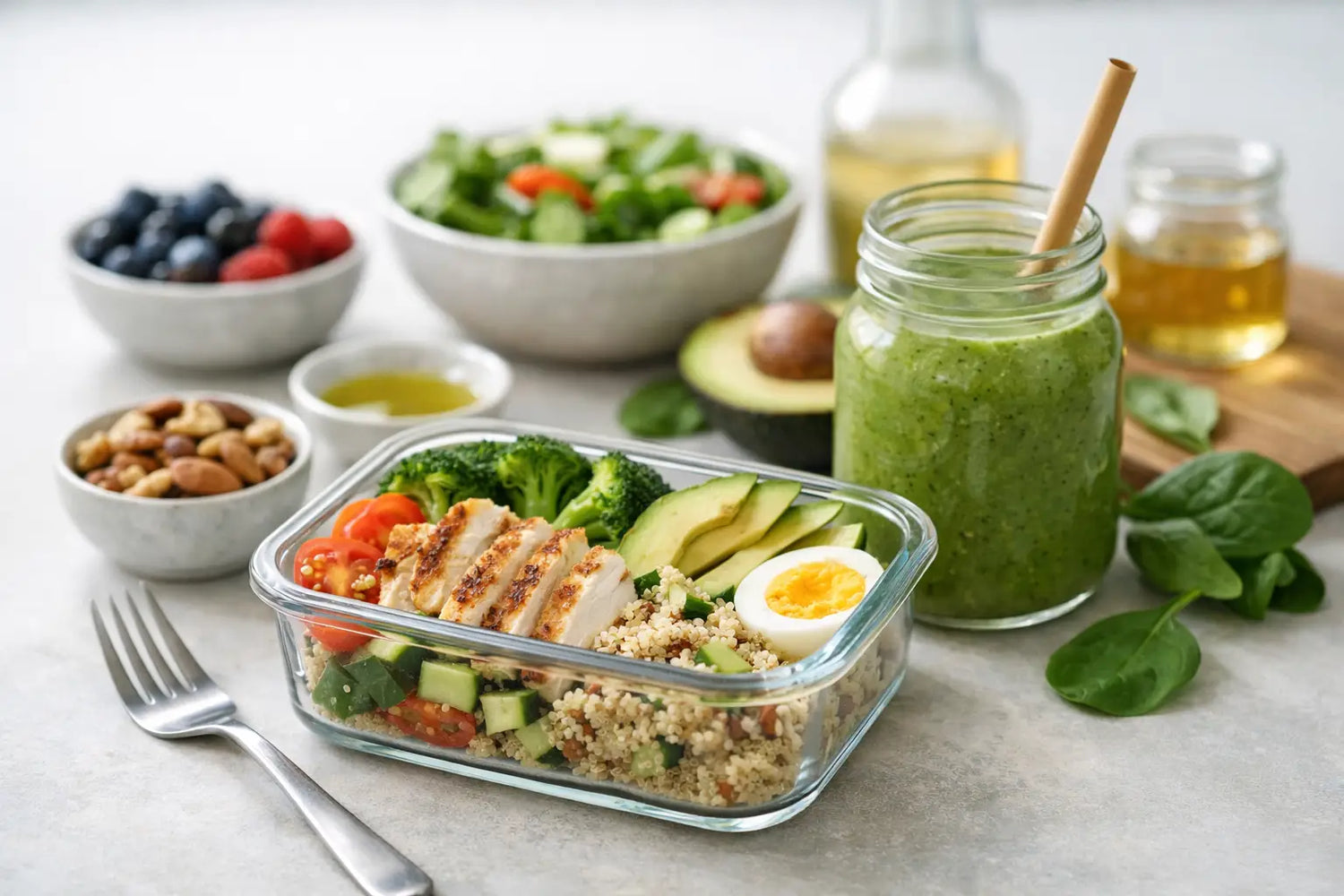
The 2 p.m. crash is rarely just about needing more coffee. When lunch is a pastry grabbed between meetings, a salad that leaves you hungry an hour later, or nothing at all, your energy, focus, and mood can feel much harder to manage. Easy lunches for hormone support are not about eating perfectly or following a restrictive plan. They are about building a midday meal that helps your body feel fed, steady, and less stressed.
For many women, hormone-related symptoms can show up as intense cravings, energy dips, irritability, sleep disruption, or a cycle that feels more difficult than usual. Food cannot diagnose or treat a hormone condition, and a single lunch will not reset your hormones. But consistently eating enough protein, fiber, and satisfying fats can support steadier blood sugar, digestion, and the daily rhythms that help you feel more in control.
The lunch formula that makes real life easier
A supportive lunch does not need a long recipe or a fridge full of specialty ingredients. Start with one simple anchor: protein. Then add high-fiber carbohydrates, colorful produce, and a source of fat. This combination slows digestion, supports fullness, and gives your body a more reliable stream of energy than a carb-heavy lunch on its own.
Think less about rules and more about what will carry you through your actual afternoon. If you are heading into school pickup, back-to-back calls, a workout, or a demanding work block, a lunch with substance matters. A small smoothie may be convenient, but it may not be enough. On a quieter day, you may want something lighter. Your appetite, activity level, cycle phase, medications, and health needs all play a role.
Aim for a meal that includes roughly 20 to 30 grams of protein when that works for you. You do not need to track every bite. A palm-sized portion of chicken, salmon, tofu, tempeh, turkey, eggs, Greek yogurt, cottage cheese, beans, or lentils is a practical starting point.
5 easy lunches for hormone support
1. The salmon grain bowl
Start with cooked salmon, canned salmon, or smoked salmon, then add microwaveable brown rice or quinoa, cucumber, shredded carrots, greens, and avocado. Finish with olive oil, lemon, and a pinch of salt.
Salmon brings protein and omega-3 fats, while grains and vegetables add fiber and longer-lasting energy. If fish is not your thing, use rotisserie chicken or baked tofu. This is a strong option for meal-prep days because the components hold up well for several lunches.
2. The no-sad-desk-salad jar
A salad can be filling, but only if it is built like a meal. Combine greens with chickpeas or chicken, chopped vegetables, feta or pumpkin seeds, and a fiber-rich carb such as roasted sweet potato, farro, or whole-grain crackers on the side. Pack dressing separately so everything stays fresh.
The difference between a lunch that satisfies and a lunch that sends you searching for snacks at 3 p.m. is often protein, carbs, and fat. Do not be afraid of adding all three. A salad made only of vegetables may feel virtuous, but your body needs more than volume to stay regulated.
3. The high-protein snack plate
For overwhelmed days, assembly counts as cooking. Pair hard-boiled eggs, turkey slices, hummus, cheese, edamame, or cottage cheese with fruit, baby carrots, whole-grain crackers, and nuts. Add a few squares of dark chocolate if that makes lunch feel more complete.
This is especially helpful for neurodivergent adults, busy parents, and anyone who struggles with decision fatigue around food. Keep a few of these ingredients visible and ready in the fridge. A low-effort lunch you will actually eat is more useful than an elaborate plan that never happens.
4. The warm lentil and chicken soup combo
Use a store-bought lentil, bean, or vegetable soup as the base, then boost it with shredded chicken, leftover turkey, white beans, or a side of Greek yogurt. Add a slice of whole-grain toast with olive oil or avocado if you need more staying power.
Warm meals can feel grounding when stress is high, and soups are an easy way to get more vegetables and fluids into the day. Check the label if sodium is a concern for you, but do not let nutrition perfectionism stop you from using convenient foods. Frozen vegetables, canned beans, and prepared soup can absolutely be part of a supportive routine.
5. The taco-style power bowl
Layer black beans or ground turkey with rice, corn, salsa, lettuce, peppers, avocado, and plain Greek yogurt. Use taco seasoning, lime, and cilantro to make it feel like a meal you want to repeat.
Beans offer fiber and plant protein, while the yogurt adds creaminess and extra protein. If you are prone to afternoon cravings, this balanced bowl can be far more satisfying than trying to white-knuckle your way through with a light lunch and a second coffee.
Make the supportive choice the easiest choice
The most helpful lunch is usually the one you can repeat without draining your time, budget, or mental energy. Pick two proteins, two carbohydrate bases, and two vegetable options each week. That gives you enough variety without turning lunch into another project to manage.
For example, you might choose rotisserie chicken and canned beans, rice cups and sweet potatoes, plus bagged greens and frozen broccoli. From those few ingredients, you can make bowls, wraps, salads, or warm plates in minutes. A little repetition is not boring when it creates more calm in your day.
It also helps to prepare for the moment when hunger is already loud. Keep shelf-stable backups at work or in your bag: tuna or salmon packets, roasted chickpeas, nuts, whole-grain crackers, and protein-forward snack bars. These are not meant to replace every meal. They are your bridge between a busy schedule and the next chance to eat something more substantial.
A few hormone-supportive habits beyond the plate
Lunch works best when it is part of a broader rhythm. Try to eat before you are completely ravenous, especially if skipping meals tends to make you shaky, irritable, or more likely to overeat later. Drinking water alongside lunch can help too, although water is not a substitute for food.
Caffeine is another area where it depends. Coffee can fit into a healthy routine, but relying on it in place of lunch can amplify the wired-and-tired feeling many people are trying to escape. If you love an afternoon coffee, having it after a balanced meal may feel very different from having it on an empty stomach.
If you have PCOS, diabetes, thyroid disease, endometriosis, are pregnant, or are managing significant menstrual changes, personalized guidance from a registered dietitian or healthcare professional can be especially valuable. You deserve support that considers your full health picture, not one-size-fits-all advice.
Your lunch does not need to look picture-perfect to support you. It just needs to be enough: enough protein to steady you, enough fiber to satisfy you, enough flavor to make eating feel good, and enough simplicity that you can do it again tomorrow. Start with one dependable bowl, plate, or soup-and-toast combination this week, and let that small reset make the rest of your afternoon feel a little more yours.


Leave a comment
This site is protected by hCaptcha and the hCaptcha Privacy Policy and Terms of Service apply.