
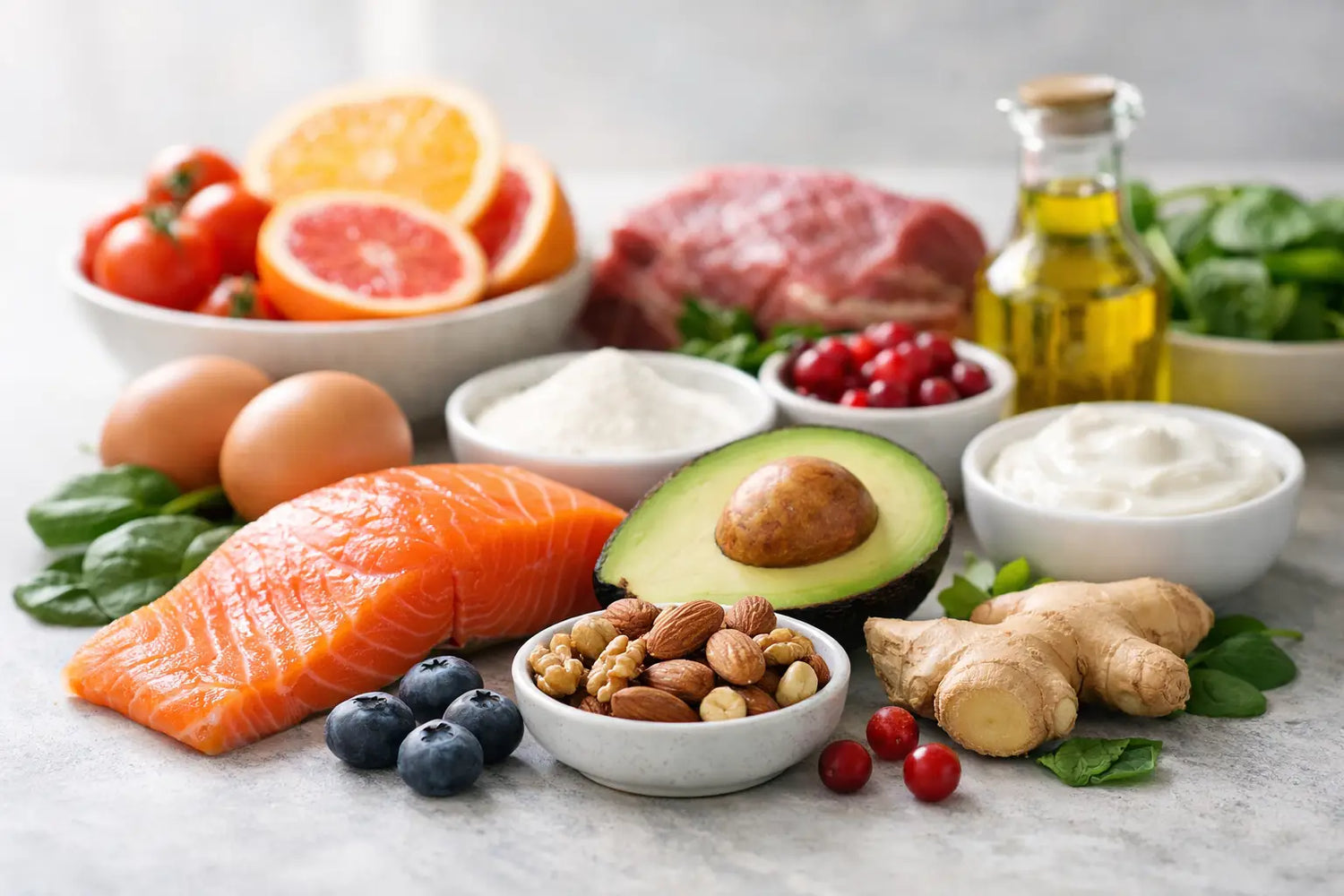
Your skin does not need a complicated 14-step routine to get nutritional support. The best foods for collagen production are ordinary, flexible staples that give your body the raw materials it needs to make and protect this essential structural protein. Think satisfying meals, smart pairings, and a routine you can actually repeat when life is full.
Collagen helps support the structure of skin, joints, bones, tendons, and connective tissue. Our natural production gradually slows with age, while stress, smoking, frequent sun exposure, poor sleep, and a low-quality diet can add to the strain. Food cannot erase every change you see in the mirror, but a consistent, well-fed body is better equipped to maintain healthy-looking skin from within.
How food supports collagen in real life
There is one helpful distinction to make: eating collagen-rich foods is not the same as sending collagen directly to your face. Your digestive system breaks proteins down into amino acids and small peptides. Your body then uses those building blocks where it needs them.
To make collagen, your body especially relies on protein and vitamin C, along with nutrients such as zinc and copper. That means the most supportive plate is not built around one trendy ingredient. It is built around enough total protein, colorful produce, and meals you can keep making without mental overload.
If your goal is calmer, more consistent beauty-from-within care, start there. A dramatic "perfect skin" grocery haul is not required.
The best foods for collagen production
1. Salmon, sardines, and other fish
Fish provides complete protein, including amino acids your body can use to build collagen. Fatty fish such as salmon, sardines, trout, and mackerel also provide omega-3 fats, which support the skin barrier and help keep skin feeling less dry.
Canned salmon or sardines count. They are often faster, more affordable, and easier to keep on hand than fresh fish. Try salmon with a lemony salad, or add canned sardines to toast with tomatoes and herbs.
2. Chicken and turkey
Poultry is a practical protein choice, especially cuts that include more connective tissue. Chicken thighs, drumsticks, and slow-cooked turkey are satisfying options for soups, grain bowls, tacos, and family dinners.
You do not need to eat skin or cartilage if you do not enjoy it. The bigger win is consistently eating enough high-quality protein across your day, rather than waiting until dinner to have most of it.
3. Eggs
Eggs are a low-effort source of complete protein, and egg whites contain proline, an amino acid involved in collagen formation. The yolk also offers nutrients including biotin and choline, making whole eggs a useful addition to a balanced routine.
For busy mornings, pair eggs with fruit or vegetables rather than treating them as a stand-alone protein. Scrambled eggs with peppers, spinach, and salsa gives you protein plus vitamin C in one simple meal.
4. Greek yogurt, cottage cheese, and milk
Dairy foods offer protein, and options like Greek yogurt and cottage cheese are especially convenient when you need a snack that feels more substantial than a handful of crackers. Milk also contributes protein and is easy to blend into smoothies.
Choose the version that works for your digestion and preferences. If dairy does not agree with you, you can get the same big-picture benefits from fish, eggs, meat, soy foods, beans, and lentils.
5. Beans, lentils, tofu, and edamame
Plant-based eaters can absolutely support collagen production through food. Beans, lentils, tofu, tempeh, and edamame provide protein, while legumes also bring fiber that supports steady energy and gut health.
Because many plant proteins are lower in one or more essential amino acids than animal proteins, variety matters. Rotate lentil soup, tofu stir-fries, bean bowls, nuts, seeds, and whole grains over the week. Soy foods are particularly helpful because they provide a complete plant protein.
6. Bell peppers, citrus, kiwi, and berries
Vitamin C is non-negotiable for collagen synthesis. Without enough of it, your body cannot complete the process efficiently. Fortunately, this is one of the easiest nutrients to add without turning your meals into a project.
Red and yellow bell peppers, oranges, grapefruit, kiwi, strawberries, and other berries are excellent choices. Add berries to yogurt, snack on citrus, or toss sliced peppers into wraps and salads. Fresh or frozen fruit both work.
7. Broccoli, Brussels sprouts, and leafy greens
Vegetables bring vitamin C and a broad mix of antioxidants that help protect the body from oxidative stress. Broccoli and Brussels sprouts are especially useful, while spinach, kale, and other leafy greens contribute vitamin C, carotenoids, and folate.
If raw greens feel like another chore, use what is easy: frozen broccoli in a microwave bowl, bagged salad with dinner, or spinach stirred into pasta sauce. Consistency beats the most photogenic smoothie.
8. Tomatoes and sweet potatoes
Tomatoes contain lycopene, and orange vegetables such as sweet potatoes provide beta-carotene. These plant compounds do not create collagen on their own, but they help support skin against everyday oxidative stress, particularly when paired with a diet rich in protein and vitamin C.
Cooked tomatoes can be a convenient option because canned tomato soup, sauce, and crushed tomatoes are accessible year-round. Add white beans or turkey to tomato sauce for a meal that works harder for you.
9. Pumpkin seeds, cashews, and seafood
Zinc and copper are smaller pieces of the collagen picture, but they still matter. Pumpkin seeds and cashews are easy sources, while oysters and other shellfish provide particularly high amounts of zinc.
A tablespoon of pumpkin seeds over oatmeal or a yogurt bowl is a realistic habit. There is no need to chase very high-dose supplements unless a clinician has identified a need, since excess zinc can interfere with copper balance.
10. Bone broth, with realistic expectations
Bone broth contains protein and may contain collagen-derived compounds, but its amount can vary widely by brand and recipe. It can be a comforting addition to a nourishing diet, especially as a base for soup, but it is not a magic replacement for a protein-rich eating pattern.
Use it because you enjoy it. Build it into a real meal with chicken, tofu, beans, vegetables, and noodles or rice, rather than relying on a mug of broth to do all the work.
Build the pairings that make a difference
The easiest collagen-supporting rule is this: combine a protein source with a vitamin C-rich fruit or vegetable at least once or twice a day. This lowers decision fatigue and helps your plate cover the key basics.
A few real-life examples: Greek yogurt with berries and pumpkin seeds; a turkey and bell pepper wrap; tofu with broccoli and citrusy sauce; salmon with sweet potato and greens; or lentil soup with a kiwi or orange on the side. These are not strict rules. They are repeatable building blocks for days when you want to feel more in control.
It also helps to spread protein across meals. A protein-free breakfast followed by a very large dinner may fit some schedules, but many people find they feel more satisfied and steady when protein shows up earlier too. If you are unsure where to begin, make breakfast or your afternoon snack the first reset point.
What can quietly work against your efforts
Collagen-supportive food is only part of the picture. Regular sunscreen use matters because UV exposure breaks down collagen in the skin. Smoking also has a well-established negative effect on collagen and skin healing. Sleep, hydration, and stress support matter too, even though none of them need to be perfect.
Be cautious with promises that one food will "reverse" sagging, wrinkles, or joint pain. Skin changes are influenced by age, genetics, hormones, sun exposure, medical conditions, and overall nutrition. During perimenopause and menopause, for example, changes in estrogen can affect skin thickness and hydration. Food can be supportive, but it is not a substitute for personalized medical care.
Collagen peptide supplements may be a useful optional tool for some people, but they work best as an addition to the basics, not a shortcut around them. If you are pregnant, nursing, managing kidney disease, have food allergies, or take medication for a health condition, check with a qualified clinician before making major supplement changes.
Start with one calm, repeatable reset
Choose two protein foods you genuinely like, two vitamin C-rich produce options, and one easy snack for the week ahead. Put them where you will see them. Buy frozen berries if fresh fruit tends to go unused. Keep boiled eggs, yogurt, edamame, or hummus ready for the moments when hunger is loud and time is short.
The goal is not to eat perfectly for collagen. It is to create a way of eating that helps you feel nourished, energized, and supported in your own skin - even on the busiest days.


Leave a comment
This site is protected by hCaptcha and the hCaptcha Privacy Policy and Terms of Service apply.