
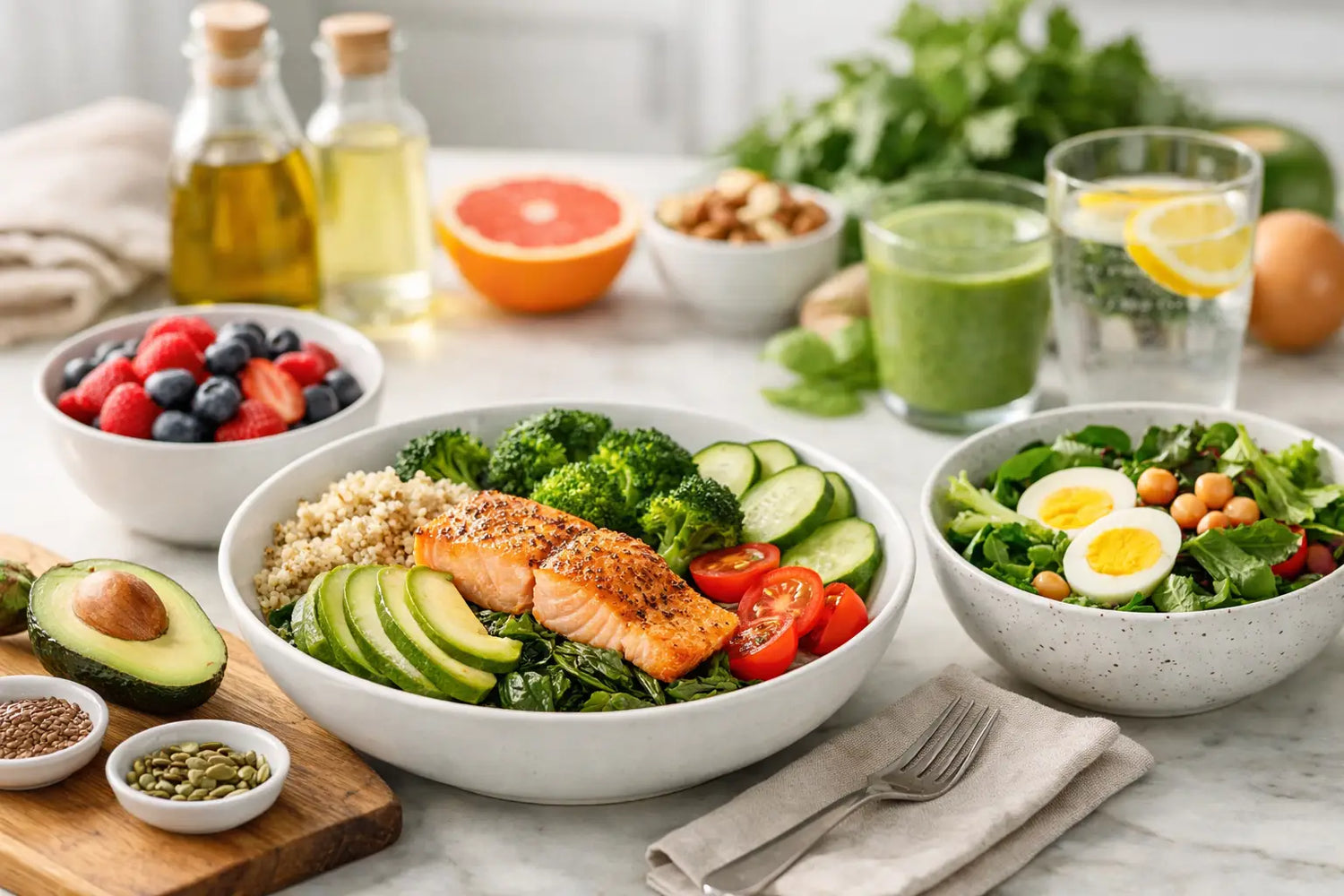
The 3 p.m. energy crash, the snacky feeling that arrives right after lunch, the week before your period when every meal feels harder to figure out - these moments are not a personal failure. They are often a sign that your body needs steadier support. This guide to hormone friendly meals is here to make that support feel simple, satisfying, and realistic, even when you are feeding a family, working through a packed day, or running low on mental bandwidth.
Hormone-friendly eating is not about finding one magical food or following a rigid cycle-based menu. Your hormones respond to many things, including sleep, stress, movement, medical conditions, medications, and genetics. Food cannot control all of that. But regular, well-balanced meals can help support more stable energy, blood sugar, digestion, and mood - the foundations that make it easier to feel calm and in control.
What Makes a Meal Hormone Friendly?
A hormone-friendly meal is a balanced meal that gives your body enough energy and a mix of nutrients to use it well. It does not need to be expensive, perfectly organic, or made from scratch. Think less about restriction and more about building a plate that helps you feel satisfied for a few hours instead of immediately hunting for another snack.
The most helpful starting point is to include protein, fiber-rich carbohydrates, colorful produce, and satisfying fats. Protein supports fullness and provides amino acids your body uses in countless processes. Fiber helps slow digestion and supports gut health. Carbohydrates give your brain and muscles accessible energy. Fats help meals taste good, keep you full, and help your body absorb certain vitamins.
When one of these pieces is missing, you may still have a meal, but it may not carry you through your day in the same way. Coffee and a pastry can be convenient, for example, but adding Greek yogurt, eggs, or a breakfast sandwich with fruit can create a more grounded start. The goal is not to label foods as good or bad. It is to add what helps you feel better.
The Hormone Friendly Meals Formula
When you need a fast decision, use this flexible formula: protein + fiber-rich carb + produce + fat or flavor.
A bowl of oatmeal becomes more complete with Greek yogurt or protein-rich milk, berries, chia seeds, and nut butter. A salad becomes a real lunch when you add chicken, tofu, lentils, or tuna, plus beans or whole grains and a dressing you genuinely enjoy. Pasta can absolutely fit too - pair it with a protein source, vegetables, and olive oil or a creamy sauce for staying power.
This framework matters because under-eating during the day often catches up with people at night. You may feel out of control around food, but the issue is not always willpower. Sometimes it is simply that lunch was too light, breakfast was skipped, or your body has been trying to make up for missed energy all day.
Start With Protein, Not Perfection
For many adults, building meals around a reliable protein source is the easiest first reset. Options can include eggs, cottage cheese, Greek yogurt, chicken, fish, turkey, tofu, tempeh, edamame, beans, lentils, or a protein shake when a full meal is not practical.
You do not need to count every gram to benefit. Instead, ask a simple question: “What is the protein in this meal?” If the answer is unclear, add something easy. Keep hard-boiled eggs, yogurt cups, rotisserie chicken, frozen edamame, canned beans, or pre-cooked lentils available for low-effort support.
Keep Carbs on the Plate
Carbohydrates are not the enemy of hormone balance. In fact, cutting them too aggressively can leave some people feeling tired, irritable, overly hungry, or preoccupied with food. Your brain needs glucose, and active bodies need dependable fuel.
Choose the carbohydrates you enjoy and can digest well. Oats, potatoes, sweet potatoes, rice, quinoa, whole-grain bread, fruit, beans, corn, and pasta can all have a place. Pairing them with protein, fat, and fiber is what usually makes the biggest difference in how steady the meal feels.
Make Fiber Feel Easier
Fiber supports digestive regularity and can help smooth out the rise and fall of energy after eating. But suddenly adding a large amount can cause bloating or discomfort, especially if your current intake is low. Build gradually, drink enough water, and use foods you actually like.
Berries with breakfast, a handful of greens in a wrap, beans in chili, an apple with peanut butter, or frozen vegetables stirred into dinner all count. Convenience is not cheating. Pre-washed salad kits and frozen produce are often the tools that make a nourishing routine possible.
Four Easy Meal Ideas for Busy Weeks
These meals are designed to be repeated, adjusted, and made with what you have. Repetition can be a form of self-care when decision fatigue is high.
- Breakfast: Scrambled eggs with whole-grain toast, avocado, and fruit. If eggs are not your thing, try Greek yogurt with oats, berries, walnuts, and cinnamon.
- Lunch: A rice bowl with rotisserie chicken or tofu, microwave rice, cucumber, shredded carrots, avocado, and a sauce you love.
- Dinner: Sheet-pan salmon, chicken sausage, or chickpeas with potatoes and roasted vegetables. Add a yogurt-based dip or olive oil dressing for extra satisfaction.
- Snack-meal: Cottage cheese or yogurt with fruit and granola, or a turkey and cheese sandwich with baby carrots and hummus. This is especially useful when a traditional meal feels like too much.
Build Rhythm Before You Chase a Perfect Diet
For many people, meal timing is just as supportive as meal quality. Going long stretches without eating can contribute to shakiness, headaches, intense hunger, and a more reactive mood. If you regularly skip breakfast because you are not hungry early, you do not have to force a large meal. Start with something small that contains protein and carbohydrate, such as a banana with peanut butter, a yogurt drink, or toast with cottage cheese.
Aim for a rhythm that works for your day. That may mean three meals, or it may mean meals plus one or two planned snacks. The point is to reduce the cycle of getting too hungry, grabbing whatever is fastest, then feeling guilty about it later.
Notice patterns with curiosity rather than judgment. Are you waking up hungry at night? Feeling ravenous before dinner? Craving sugar after a stressful afternoon? These are useful clues. Try adding more protein or fiber at lunch, eating a more substantial afternoon snack, or giving yourself a real breakfast before assuming you need more discipline.
When Food Is Only One Piece of the Picture
Nutrition can be supportive, but persistent symptoms deserve more than social media advice. If you have missed or very irregular periods, severe period pain, new acne or hair changes, unexplained weight changes, frequent dizziness, digestive symptoms, or concerns about PCOS, thyroid conditions, perimenopause, or blood sugar, talk with a qualified health professional. Personalized care matters, particularly if you are pregnant, breastfeeding, managing diabetes, or have a history of disordered eating.
A gentle approach works best here. Restrictive plans can add stress to a body that already feels stressed. Instead of trying to overhaul every meal on Monday, choose one anchor for the week: add protein to breakfast, keep a balanced snack in your bag, or make dinner easier with frozen vegetables and a ready-to-use protein.
At NATFUL, we believe feeling better should not require a complicated rulebook. Let your next meal be a small reset: enough food, a little color, a satisfying protein, and the reminder that caring for your body can be practical, not perfect.

Leave a comment
This site is protected by hCaptcha and the hCaptcha Privacy Policy and Terms of Service apply.