
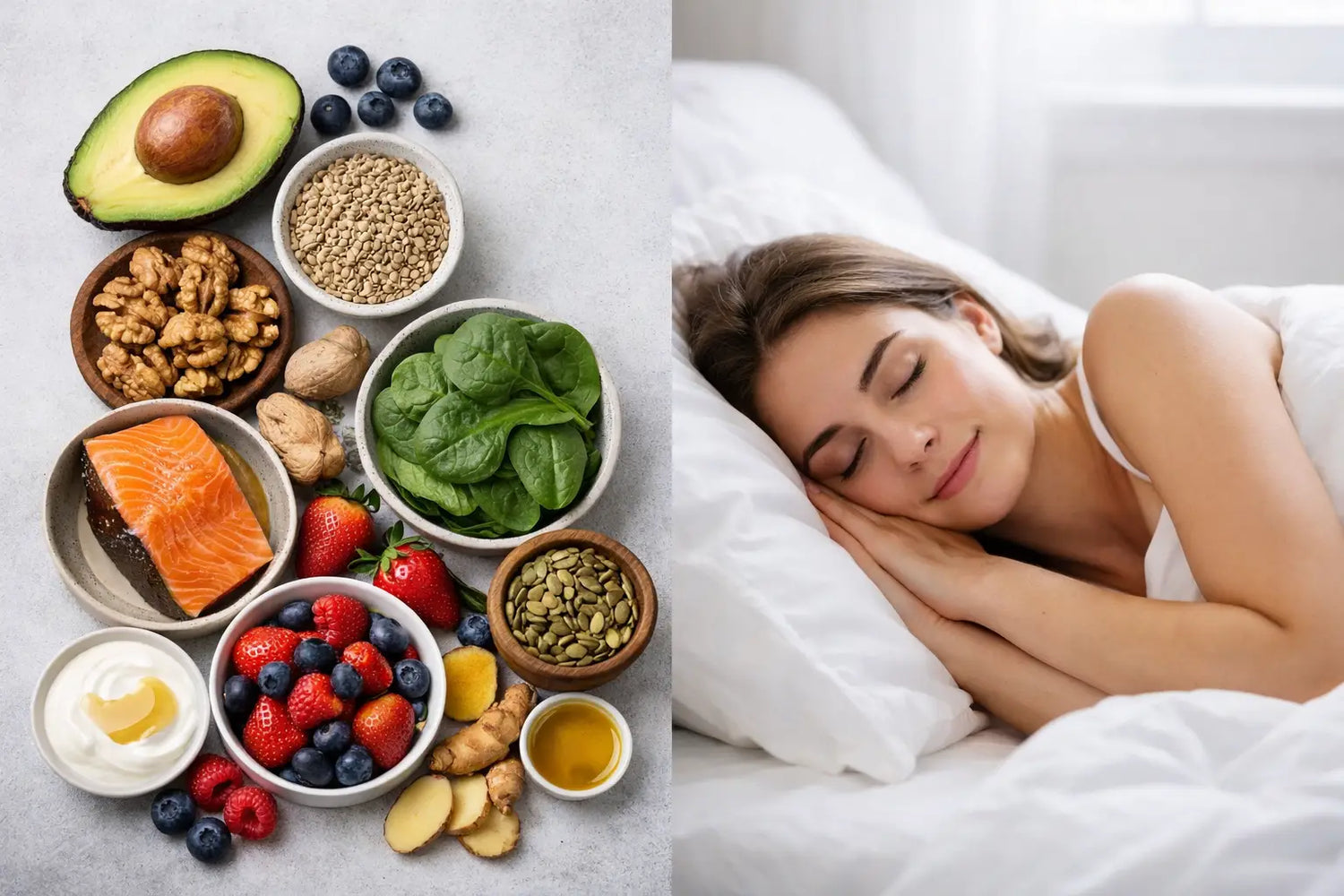
Your skin is breaking out along your jaw, your sleep is all over the place, and somehow both problems seem to flare at the same time. That is not in your head. The link between foods for hormonal acne and sleep is real, especially when stress, blood sugar swings, and inflammation are all pulling on the same hormonal strings.
If you have ever noticed worse breakouts after a few short nights, or restless sleep after a high-sugar day, your body is giving you useful information. Hormonal acne and poor sleep often feed each other. The good news is that food can help interrupt that cycle in a way that feels manageable, not extreme.
Why foods for hormonal acne and sleep matter together
Hormonal acne is rarely just about one hormone or one food. It is usually a pattern. Higher stress can raise cortisol. Poor sleep can make insulin regulation less steady. Blood sugar swings can influence androgen activity. Inflammation can make skin more reactive. When that stack builds up, breakouts often show up fast.
Food will not replace medical care if you are dealing with persistent cystic acne, irregular periods, PCOS, or chronic insomnia. But it can absolutely support a calmer baseline. The goal is not perfection. The goal is to make your meals do more work for you by supporting steadier energy, better recovery, and less internal chaos.
That is why the best foods here are doing double duty. They are not just “good for skin” or “good for sleep.” They help create the conditions your body needs to regulate both.
7 foods for hormonal acne and sleep that actually pull their weight
1. Salmon
Salmon earns its place because it supports inflammation control, skin barrier health, and nervous system function in one meal. Its omega-3 fats may help calm inflammatory pathways that can make hormonal acne look angrier and linger longer. It also provides protein, which helps keep blood sugar more stable than a carb-heavy dinner on its own.
For sleep, salmon contains vitamin D and B vitamins, and some research suggests fatty fish may support better sleep quality in certain people. It is not a magic switch, but it is one of the most efficient dinner choices when you want a meal that feels satisfying and regulating.
If salmon is not realistic every week, sardines, trout, or even canned wild salmon can still do the job.
2. Pumpkin seeds
Tiny food, surprisingly useful. Pumpkin seeds contain magnesium, zinc, healthy fats, and a bit of protein, which makes them especially relevant for this topic. Magnesium supports relaxation and sleep regulation, while zinc is often discussed in skin health because of its role in inflammation, healing, and oil balance.
This is one of those foods that fits real life well. You can add pumpkin seeds to yogurt, oatmeal, salads, or a simple snack plate without creating a whole new routine. If your evenings tend to include a blood sugar crash followed by late-night snacking, pairing pumpkin seeds with fruit or plain yogurt can be a steadier option.
3. Tart cherries
Tart cherries are often brought up for sleep because they naturally contain melatonin and plant compounds that may support recovery. They are not a cure for insomnia, but they can be a smart add-on if your sleep schedule feels fragile.
For hormonal acne, the benefit is more indirect. Better sleep supports more balanced cortisol rhythms, and that matters because stress-related flare-ups often hit the chin and jawline hard. Tart cherries also contain antioxidants, which can support the body’s overall inflammatory load.
Unsweetened tart cherry juice or frozen tart cherries are usually the easiest formats. Just watch added sugar. A “sleep food” that spikes your blood sugar can work against the result you want.
4. Greek yogurt, if dairy works for you
This one comes with an important it depends. For some people, especially those who are sensitive to dairy, yogurt may aggravate acne. For others, especially plain Greek yogurt with no added sugar, it can be a helpful food because it provides protein, calcium, and gut-supportive cultures.
Why does that matter? A higher-protein breakfast or snack can help reduce blood sugar swings later in the day, and steadier blood sugar often means fewer hormonal triggers for breakouts. Protein can also support satiety, which helps if you are stuck in the cycle of under-eating all day and eating chaotically at night.
If you suspect dairy worsens your skin, do not force it. Try a simple elimination and reintroduction approach with professional guidance if needed. If dairy does not work for you, unsweetened coconut yogurt with chia and seeds can still give you a calming snack structure.
5. Kiwi
Kiwi is one of the more underrated sleep-supportive foods. Some small studies suggest eating kiwi may help with sleep onset and duration, possibly because of its serotonin and antioxidant content. It is also rich in vitamin C, which supports skin repair and overall resilience.
What makes kiwi especially practical is that it is light, easy to digest for many people, and simple to keep on hand. If heavy nighttime snacks leave you feeling sluggish or bloated, kiwi can be a gentler option.
For acne support, think of kiwi as part of the bigger picture rather than a direct treatment. It helps most when it replaces ultra-processed sweets that tend to fuel inflammation and energy swings.
6. Oats
Oats are a strong reset food because they are affordable, easy, and genuinely useful. They contain fiber that helps support more stable blood sugar, and they also provide carbohydrates that can be calming in the evening when paired correctly. That matters because sleep can suffer when dinner is too light, too sugary, or missing a balance of carbs and protein.
For skin, the blood sugar piece is important. Frequent spikes and crashes can influence insulin and related hormonal pathways that may worsen breakouts in some people. Oats are not low-carb, but they are often much steadier than pastries, sugary cereal, or random snack food meals.
If you want oats to work harder for both acne and sleep, build them with protein and fat. Think oatmeal with chia, cinnamon, and pumpkin seeds, or overnight oats with plain yogurt if tolerated.
7. Leafy greens
Leafy greens are not exciting, but they are foundational. Spinach, kale, and similar greens provide magnesium, folate, antioxidants, and fiber. They support the kind of nutrition base that helps your body regulate stress, digestion, and inflammation more smoothly.
That can feel less dramatic than taking a supplement or cutting out ten foods at once, but it is often where real-life results start. Better digestion and more consistent micronutrient intake can help reduce the background stress your body is carrying. And when your system is less overloaded, both skin and sleep usually respond better.
Greens also pair well with foods that matter here. Add them to an egg scramble, a salmon bowl, a soup, or a smoothie. The key is consistency, not forcing down giant salads when you are already overwhelmed.
What to eat together for better results
Single foods help, but meals work better than isolated ingredients. If your goal is to support hormonal acne and sleep, your plate should help you feel steady for the next few hours, not just “healthy” in theory.
A useful formula is protein plus fiber plus healthy fat, with carbohydrates included in a balanced way. For example, salmon with rice and greens is often more regulating than a salad with almost no carbs. Oatmeal with seeds and yogurt is usually more supportive than plain toast and coffee. A kiwi with pumpkin seeds is more helpful than a handful of candy when the 9 p.m. slump hits.
This is where NATFUL’s approach to wellness really fits. You do not need a complicated food rulebook. You need meals that lower friction and help your body feel safe, nourished, and more in control.
Foods that may make the cycle worse
This part is personal, so think patterns, not panic. Highly sugary foods, ultra-processed snacks, and meals that leave you hungry again in an hour can make blood sugar and energy more erratic. That does not mean one dessert causes acne. It means a daily pattern of spikes, crashes, poor sleep, and stress can keep the cycle going.
Some people also notice more breakouts with dairy, whey protein, or a very high-glycemic diet. Others do not. The smartest move is to track what happens with your skin and sleep together for two to three weeks instead of guessing based on one bad day.
A simple reset routine to try this week
Start with one meal, not your whole life. Dinner is often the best place to begin because it affects overnight recovery. Try a meal built around salmon or another protein, a steady carb like rice or oats, and a vegetable rich in magnesium or fiber.
Then add one small evening food support, like kiwi or tart cherries, instead of reaching for whatever is easiest when you are tired. Keep caffeine earlier in the day, and make sure you are not accidentally under-eating. A lot of “sleep issues” are actually stress-plus-blood-sugar issues wearing a different outfit.
If your acne is severe, painful, or tied to clear hormonal symptoms, food can support you, but it may not be the whole answer. Sometimes the most effective plan includes nutrition, stress support, sleep habits, and medical care working together.
The most helpful mindset here is simple: feed the systems behind the symptoms. When your meals support calmer hormones, steadier energy, and deeper rest, your skin often has a better chance to settle too.


Leave a comment
This site is protected by hCaptcha and the hCaptcha Privacy Policy and Terms of Service apply.