
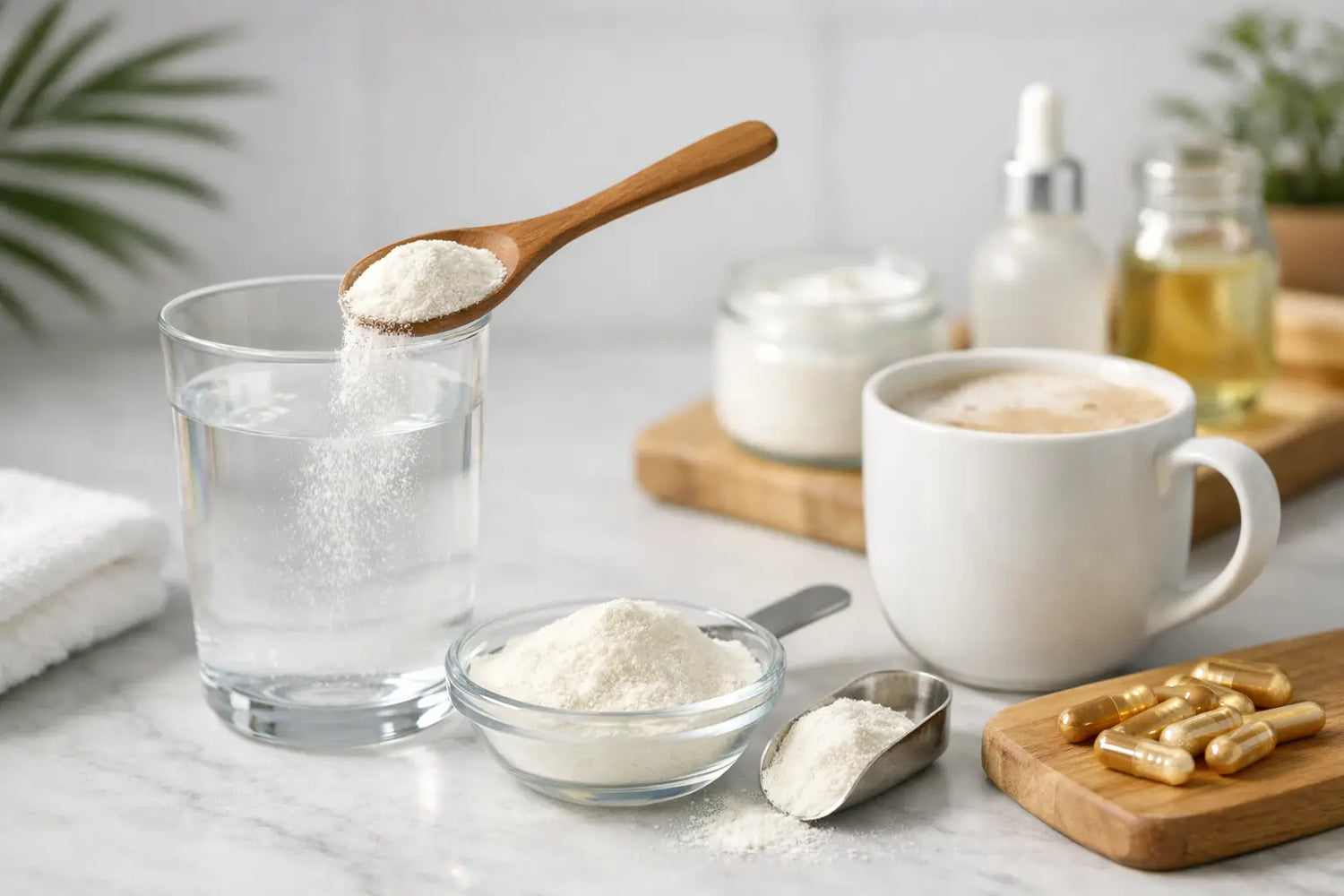
Your coffee is already brewing, breakfast is already happening, and the last thing you need is another complicated wellness task. The easiest way to use collagen peptides is to attach them to a habit you already keep - then give that small routine enough time to support real-life results.
Collagen is often framed as a beauty supplement, and it can be part of a skin-supportive routine. But a practical approach is bigger than chasing a quick glow. For many people, it is one simple way to support their protein intake and build a more consistent self-care rhythm without adding another decision to an already full day.
What collagen peptides actually are
Collagen is a structural protein found throughout the body, including the skin, joints, bones, tendons, and connective tissues. Your body makes collagen naturally, but production changes with age. Sun exposure, smoking, poor sleep, chronic stress, and a diet low in key nutrients can also affect the bigger picture of skin and connective-tissue health.
Collagen peptides are collagen proteins that have been broken into smaller pieces through hydrolysis. This makes them easy to dissolve in drinks and foods. Most powders are sourced from bovine collagen, marine collagen, or poultry collagen, and the source may influence the collagen types included.
Bovine products commonly provide types I and III, which are often used in beauty-focused formulas. Marine collagen is usually rich in type I and may appeal to people who do not eat beef, though it is not suitable for anyone with a fish allergy. The “best” choice is less about a trend and more about your dietary needs, budget, and willingness to take it consistently.
How to use collagen peptides without overthinking it
The most effective routine is usually the one you will still follow on a rushed Wednesday. Collagen peptides are typically neutral in flavor and dissolve in both warm and cold liquids, although a shaker bottle or blender helps them disappear more smoothly in cold drinks.
Start with the serving size on your product label. Many studies on collagen peptides use daily amounts ranging from about 2.5 to 10 grams, but more is not automatically better. A daily serving that feels easy to maintain is a smarter starting point than an oversized scoop you forget after three days.
Here are a few low-effort ways to make it part of your day:
- Stir unflavored collagen into coffee, tea, matcha, or hot oatmeal.
- Blend it into a smoothie with fruit, yogurt, and a source of vitamin C.
- Mix it into yogurt, chia pudding, or overnight oats.
- Add it to soups, sauces, or a simple post-workout shake.
Pair it with vitamin C, not pressure
Vitamin C plays a role in the body’s collagen production, so it makes sense to include vitamin C-rich foods in your overall diet. You do not need a perfect pairing or a complicated supplement stack. A smoothie with berries, citrus at breakfast, bell peppers at lunch, or a kiwi as a snack can all contribute.
Think of collagen as one supportive piece, not a replacement for meals. Collagen is not a complete protein because it does not provide all essential amino acids in the amounts your body needs. Keep eating a variety of protein sources such as eggs, Greek yogurt, beans, fish, poultry, tofu, or meat based on your preferences.
What results can you reasonably expect?
This is where a calm, realistic mindset helps. Research suggests that certain hydrolyzed collagen supplements may support skin hydration and elasticity and may help with joint comfort for some people. Results are not identical for everyone, and studies vary by formula, dose, and participant.
A collagen powder cannot erase years of sun exposure, fix a disrupted sleep schedule, or replace medical care for hair loss, painful joints, or significant skin changes. It can, however, fit well into a broader routine built around nourishment and consistency.
Most people who notice a difference do not see it overnight. Give a consistent routine roughly 8 to 12 weeks before deciding whether it is useful for you. During that time, pay attention to small, meaningful markers rather than looking for a dramatic transformation: Does your skin feel less dry? Are you more consistent with breakfast because your smoothie routine is working? Do you feel good about keeping one promise to yourself each day?
That last benefit matters. Wellness routines work best when they create less friction, not more.
How to choose a collagen peptide powder
A clean label can make your routine feel simpler, especially if you are managing sensitivities, a busy family schedule, or a cabinet already full of half-used supplements. Look first for a product that clearly states its collagen source and serving size.
Unflavored powders tend to be the most flexible because you can use them in coffee, recipes, or smoothies without competing flavors. Flavored versions can be convenient, but check the sweeteners and added ingredients if those affect your digestion or preferences. If you are choosing marine collagen, confirm that the sourcing and allergen information are clearly listed.
Third-party testing can be a helpful sign of quality, particularly when a brand shares clear standards around purity and ingredient transparency. Be cautious with dramatic claims about reversing aging, melting cellulite, or transforming hair overnight. Trustworthy wellness support leaves room for nuance.
Price is also part of the decision. A premium tub that feels precious or expensive to replace may not be as helpful as a straightforward option you can use every day. Your best routine should support your life, not create financial or mental pressure.
When collagen may not be the right fit
Collagen peptides are generally well tolerated, but they are not necessary for everyone. Some people experience mild digestive discomfort, such as feeling full or bloated, particularly when they start with a large serving. If that happens, try a smaller amount, take it with food, or pause and reassess.
Avoid any collagen source you are allergic to. If you are pregnant, breastfeeding, managing a health condition, taking medications, or have questions about whether a supplement fits your nutrition needs, check with a qualified healthcare professional first. This is especially useful when symptoms such as fatigue, shedding hair, persistent joint pain, or skin changes could have an underlying cause that deserves attention.
Plant-based eaters should know that collagen itself is animal-derived. Plant-based products marketed as “collagen boosters” do not contain collagen peptides, though they may include nutrients involved in collagen formation. Whether they are worthwhile depends on their ingredients and your overall diet.
A simple 30-day collagen reset
Instead of turning this into a rigid challenge, use the next month as a gentle experiment. Choose one daily anchor: your first coffee, your workday smoothie, or your evening yogurt bowl. Keep the collagen where you will see it, use the same serving each day, and make a quick note once a week about how the routine feels.
Do not judge the habit by one missed day or one mirror check. Look for consistency over perfection. If it is easy, enjoyable, and fits your budget, keep going. If it creates stress or digestive discomfort, adjust without guilt.
A supportive routine does not need to be impressive to work. Sometimes feeling more in control starts with one small scoop, one familiar cup, and a choice that makes caring for yourself feel possible again.


Leave a comment
This site is protected by hCaptcha and the hCaptcha Privacy Policy and Terms of Service apply.