
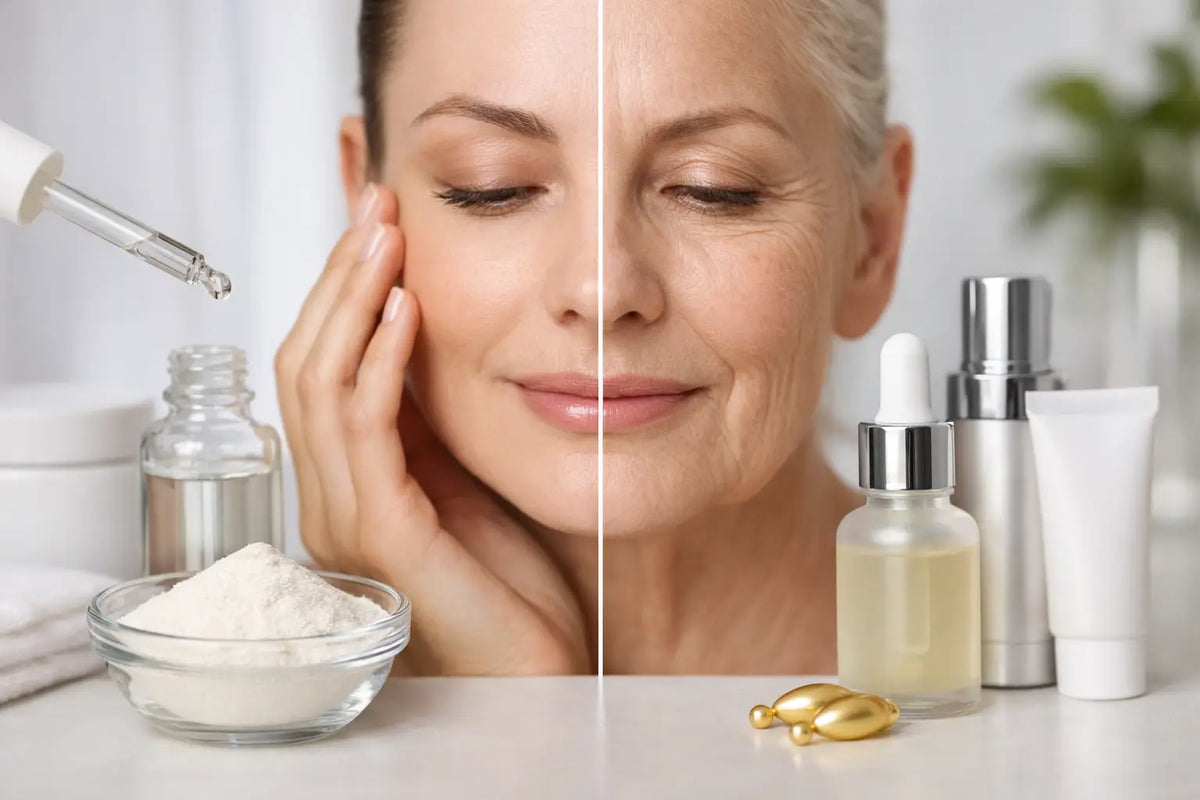
Your skin routine does not need to become a 12-step project to make a visible difference. When deciding between collagen versus retinol, the most useful question is not which one is “better.” It is which concern you want to support first, and which habit you can realistically keep doing when life gets busy.
Collagen and retinol work in very different ways. Collagen is usually approached as beauty-from-within support, while retinol is a topical vitamin A derivative used to improve the look of skin texture, uneven tone, and fine lines over time. One is not a replacement for the other. But you may not need both right now.
Collagen Versus Retinol: The Real Difference
Collagen is a structural protein found naturally in skin, joints, bones, and connective tissue. Your body makes it, but production gradually declines with age. Sun exposure, smoking, chronic stress, poor sleep, and low overall nutrition can also affect the skin’s collagen support system.
When people talk about collagen for beauty, they usually mean hydrolyzed collagen peptides in a powder, capsule, or ready-to-drink supplement. These peptides are broken into smaller pieces for digestion. Research suggests that consistent collagen peptide supplementation may support skin hydration, elasticity, and the appearance of fine lines for some people. Results are gradual, not overnight, and they depend on the formula, your diet, and your individual body.
Retinol is applied directly to the skin. It encourages skin-cell turnover and can help support collagen production in the skin over time. That is why it is widely used for concerns such as fine lines, rough texture, dullness, clogged pores, and post-breakout marks.
The trade-off is that retinol can be irritating, especially at the beginning. Dryness, flaking, redness, and sensitivity are common when the product is too strong, used too often, or paired with too many other active ingredients.
When Collagen May Be the Better Starting Point
Collagen can be a gentle place to start if your skin feels dry, less bouncy, or generally depleted and you want a low-maintenance wellness habit. It may also suit people who do not tolerate many topical actives, have a compromised skin barrier, or simply want to support skin alongside hair, nails, joints, and overall protein intake.
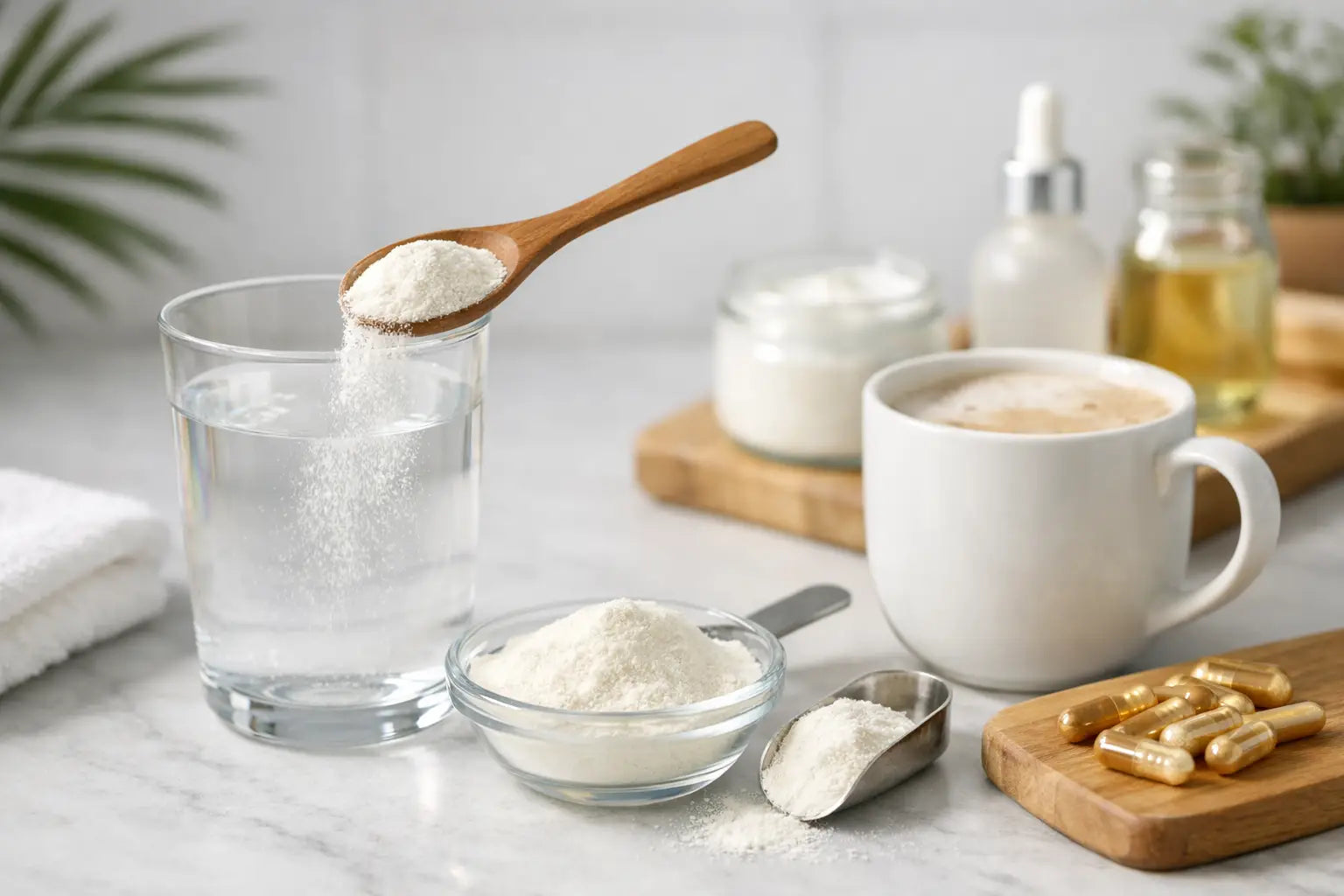
It is especially practical for people who want one small routine that fits into real life. Adding collagen peptides to coffee, smoothies, oatmeal, or yogurt takes little extra effort. The key is consistency. Taking it once or twice a week is unlikely to tell you much about whether it works for you. Give a daily habit at least eight to twelve weeks before judging the result.
That said, collagen is not a magic shortcut around the basics. It works best alongside enough protein, vitamin C-rich foods, hydration, sleep, and sun protection. Think of it as supportive nutrition, not a substitute for a balanced routine.
Choose collagen first if your priority is a simple beauty-from-within ritual and your skin concerns are more about dryness, early loss of firmness, or looking tired than active breakouts or stubborn texture.
What to look for in a collagen supplement
Look for hydrolyzed collagen peptides and clear serving information rather than vague promises. Many people choose bovine collagen for types I and III, which are commonly associated with skin support, while marine collagen is another option for those who prefer a fish-based source. If you have fish, shellfish, or other relevant allergies, always check the source and label carefully.
A supplement is also easier to keep up with when it fits your preferences. Unflavored powder may be easiest to add to everyday foods, while flavored options can make the habit feel more enjoyable. The best choice is the one you will actually use consistently.
When Retinol May Be the Better Starting Point
Retinol is often the more targeted choice if you want to improve visible texture, fine lines, uneven-looking tone, or recurring clogged pores. It asks more of your routine than collagen does, but it can be worthwhile when you are patient and protect your skin barrier.
Start with a low-strength retinol product one or two nights a week. Use a pea-sized amount for the entire face on dry skin, then follow with a plain moisturizer. If your skin feels comfortable after a few weeks, increase slowly. More product and more frequent use do not mean faster results. They usually mean more irritation.
During the adjustment phase, keep the rest of your routine calm. Avoid using retinol on the same night as strong exfoliating acids, scrubs, or other potentially irritating treatments unless a qualified skin professional has advised you otherwise. A gentle cleanser, moisturizer, and daily broad-spectrum sunscreen create the foundation that makes retinol easier to tolerate.
Sunscreen is not optional here. Retinol can make skin more sensitive, and unprotected sun exposure can worsen the very discoloration and premature aging concerns you are trying to address.
If you are pregnant, trying to conceive, or breastfeeding, ask your obstetrician or dermatologist before using retinol or other retinoids. It is also wise to get personal guidance if you have eczema, rosacea, persistent irritation, or are using prescription acne treatments.
Can You Use Collagen and Retinol Together?
Yes. For many people, collagen and retinol are complementary rather than competing choices. Collagen supports a consistent internal wellness routine, while retinol works directly at the skin’s surface and within its renewal process.
The simplest approach is to avoid changing everything at once. Start one habit, give your skin and schedule time to adjust, then add the other if it still matches your goals. This helps you identify what is helping, what is irritating, and what feels sustainable.
A calm combined routine might look like this:
- Take collagen peptides daily in a drink or meal you already have.
- Use a gentle cleanser and moisturizer morning and night.
- Apply broad-spectrum sunscreen every morning, including cloudy days.
- Introduce low-strength retinol one or two evenings per week, then increase only as your skin tolerates it.
Common Mistakes That Slow Progress
The first mistake is expecting quick transformation. Collagen supplements and retinol both require consistency, and retinol often includes an adjustment period before skin looks calmer and more even. Taking progress photos in the same lighting once a month can be more useful than checking the mirror every morning.
The second is treating irritation as proof that a product is working. Burning, peeling, or persistent redness are signs to pause, simplify, and rebuild your skin barrier. A gentler routine used consistently will usually take you further than an aggressive one you abandon after two weeks.
The third is overlooking the everyday factors that show up on your skin. Sleep, stress, hydration, food quality, and sun exposure all matter. If your schedule is overloaded, begin with the habit that creates the least friction. A daily collagen drink or a twice-weekly retinol night can become a small reset that helps you feel more in control.
How to Choose Without Overthinking It
Choose collagen if you want easy, inside-out support and your main goal is skin that looks more hydrated, resilient, and refreshed over time. Choose retinol if you want a proven topical option for texture, fine lines, clogged pores, or uneven-looking tone and are willing to introduce it slowly.
Choose both if you enjoy a simple daily wellness ritual and can commit to a gentle, sunscreen-centered skincare routine. Skip the pressure to do it all at once. The routine that gives real-life results is the one that still works on tired mornings, busy weeks, and the seasons when your skin needs a little more care.
Start with one supportive step this week, keep it simple, and let consistency do the heavy lifting.


Leave a comment
This site is protected by hCaptcha and the hCaptcha Privacy Policy and Terms of Service apply.