
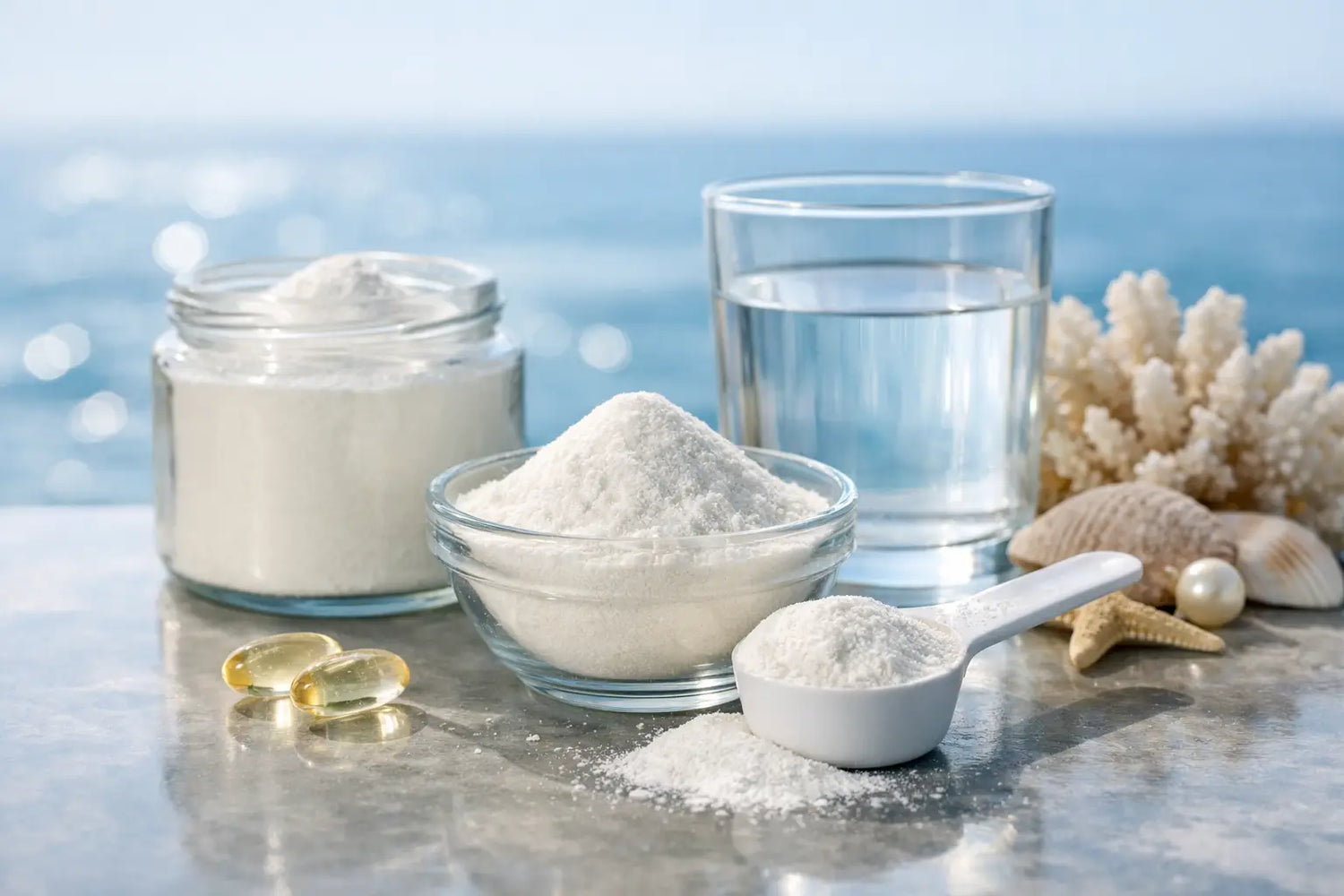
That scoop of collagen in your morning coffee can feel like a small act of self-care. But when you are juggling work, family, stress, and a skin routine you barely have time to finish, you deserve more than a pretty tub and big promises. This marine collagen powder review focuses on what actually matters: quality, dose, taste, realistic results, and whether the habit fits your real life.
Marine collagen can be a useful beauty-from-within tool, especially for people looking to support skin hydration and elasticity as they age. It is not a shortcut around sleep, nutrition, sun protection, or stress management. Think of it as one practical piece of a calmer, more supportive wellness routine.
What Marine Collagen Powder Is Really For
Marine collagen is collagen protein sourced from fish, typically fish skin or scales. It is usually rich in type I collagen, the form most abundant in skin, bones, tendons, and connective tissue. Most powders contain hydrolyzed collagen peptides, meaning the protein has been broken into smaller pieces that dissolve more easily and are easier for the body to absorb.
The appeal is simple: collagen production naturally declines with age, while sun exposure, smoking, poor sleep, high stress, and inadequate nutrition can all affect the skin’s structure. A daily collagen powder may help support skin hydration, elasticity, and the appearance of fine lines over time. Some people also use it as part of a joint-support routine.
The key phrase is over time. If a product promises a dramatic transformation in seven days, keep your expectations grounded. Studies on collagen peptides often measure changes after eight to 12 weeks of consistent use. Your results will depend on the formula, your dose, your baseline diet, and the basics that no supplement can replace.
Marine Collagen Powder Review: What We Look For
A good review should not stop at “it mixes well.” Convenience matters, but the label tells you whether a powder is designed to deliver meaningful support.
A useful daily serving size
Many collagen studies use about 2.5 to 10 grams of collagen peptides daily. You do not necessarily need the largest number on the label, but a powder that clearly states its collagen amount per serving is easier to assess than a vague proprietary blend.
For a simple beauty-focused routine, a product in the lower-to-middle part of that range may be enough. If you are using collagen for skin and joint support, a higher serving may make sense. What matters most is choosing an amount you can take consistently without making your routine feel like another task.
Clear sourcing and quality standards
Fish source matters. Look for a brand that identifies marine sourcing clearly and provides transparent quality information, including third-party testing where available. This helps you feel more confident about purity and gives you a better picture of what you are bringing into your daily routine.
Wild-caught and sustainably sourced language can be helpful, but it should not replace meaningful details. A polished label is not proof of quality on its own. Clear sourcing, straightforward ingredients, and transparent testing standards are more useful signals.
An ingredient list that matches your needs
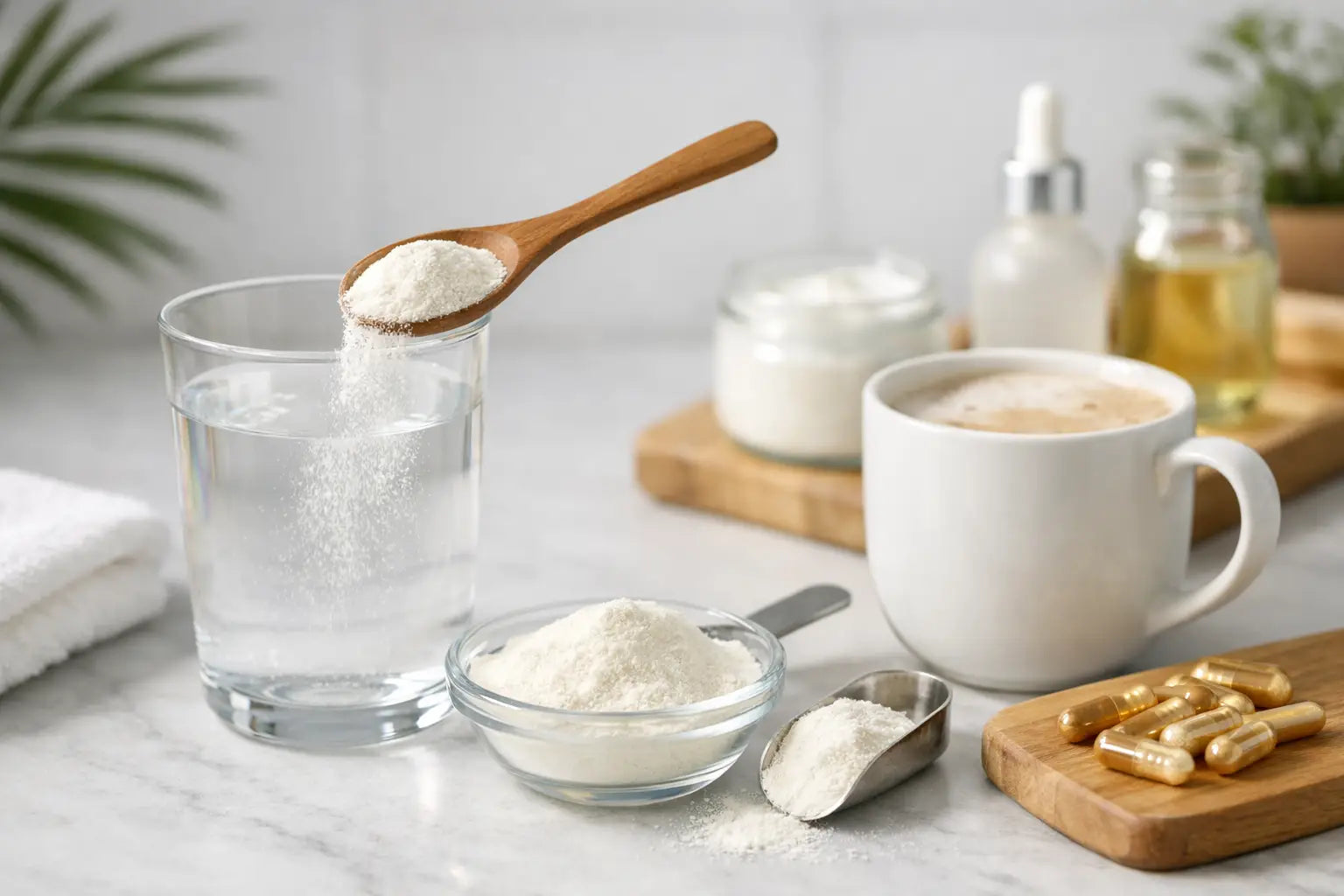
Unflavored marine collagen powders are often the most flexible. You can add them to coffee, tea, smoothies, oatmeal, yogurt, or even water. A simple formula with collagen peptides and little else is a solid choice if you are sensitive to sweeteners, flavors, or digestive triggers.
Flavored options can make consistency easier, especially if you dislike the idea of mixing a plain powder into drinks. The trade-off is that some contain added sugar, sugar alcohols, gums, artificial flavors, or extra vitamins that you may not need. There is no universally best option. The best one is the formula you can tolerate and use without forcing it.
Taste and mixability in real life
Marine collagen has a reputation for a fishy taste, but a well-made hydrolyzed powder should be mild or nearly neutral. If you notice a strong fish odor the moment you open it, it may be difficult to keep using day after day.
Mixability is also more than a minor detail. A powder that clumps in cold water may work beautifully in hot coffee, while another blends best in a smoothie. Start with your most predictable daily drink. A wellness habit is far more likely to stick when it takes 15 seconds instead of becoming a kitchen experiment every morning.
What Results Can You Realistically Expect?
The most common reason people try marine collagen is skin support. With consistent use, some people notice that skin looks more hydrated, feels a little smoother, or appears more bouncy over several weeks. These are usually subtle shifts, not a filter-level change.
Collagen peptides may also support nail strength for some users. If your nails split easily or your skin feels dry and depleted, collagen can be worth trying as part of a broader reset. Pair it with adequate protein, colorful produce, healthy fats, hydration, and sleep whenever possible. Your body builds and maintains connective tissue using far more than one scoop of powder.
Joint comfort is more individual. Some active adults find collagen useful alongside strength training, mobility work, and recovery habits. Others do not notice much. If joint pain is persistent, worsening, or limiting your movement, it deserves guidance from a qualified healthcare professional rather than a supplement-only approach.
A helpful way to track your experience is to choose one or two signals before you begin: skin dryness, nail breakage, or how consistently you complete your routine. Take a photo in the same lighting every few weeks if skin is your focus. This keeps you from judging a product based on one tired Tuesday.
Who Should Skip Marine Collagen or Check First?
Marine collagen is not appropriate for anyone with a fish or shellfish allergy, depending on the product and its manufacturing process. Read allergen statements carefully and choose another collagen source or a non-collagen wellness option if there is any uncertainty.
If you are pregnant, breastfeeding, managing a medical condition, or taking medication, check with your healthcare provider before adding a new supplement. The same applies if you have a history of food sensitivities or digestive symptoms that tend to flare with protein powders.
Marine collagen is also not vegan or vegetarian. Plant-based products can support skin health in other ways, but they do not contain collagen itself. That distinction is worth knowing before you spend money based on packaging that uses broad “plant-powered beauty” language.
How to Make Collagen a Habit That Sticks
The most effective collagen powder is the one that disappears into a routine you already have. Attach it to a daily anchor: your first coffee, post-workout smoothie, afternoon tea, or breakfast bowl. Keep the scoop where you will see it, and avoid creating a complicated ritual that only works on your most organized days.
Consistency beats perfection. Missing a day does not erase your progress, and doubling up rarely makes a difference. A simple daily scoop, taken for eight to 12 weeks, gives you a fairer read on whether the product works for you.
For a more complete beauty-and-wellbeing reset, support the routine from both directions. Let a collagen habit care for the physical side, then use practical tools, such as a short evening journal or a realistic stress reset, to make space for the sleep and calm your skin also benefits from. NATFUL’s approach is built around that kind of usable support: small actions that help you feel more in control.
Marine collagen does not need to be complicated or perfect to be worthwhile. Choose a transparent powder with a sensible dose, make it easy to take, and give your body time. The goal is not to chase flawless skin. It is to build a steady routine that helps you feel cared for, even when life is full.

Leave a comment
This site is protected by hCaptcha and the hCaptcha Privacy Policy and Terms of Service apply.