
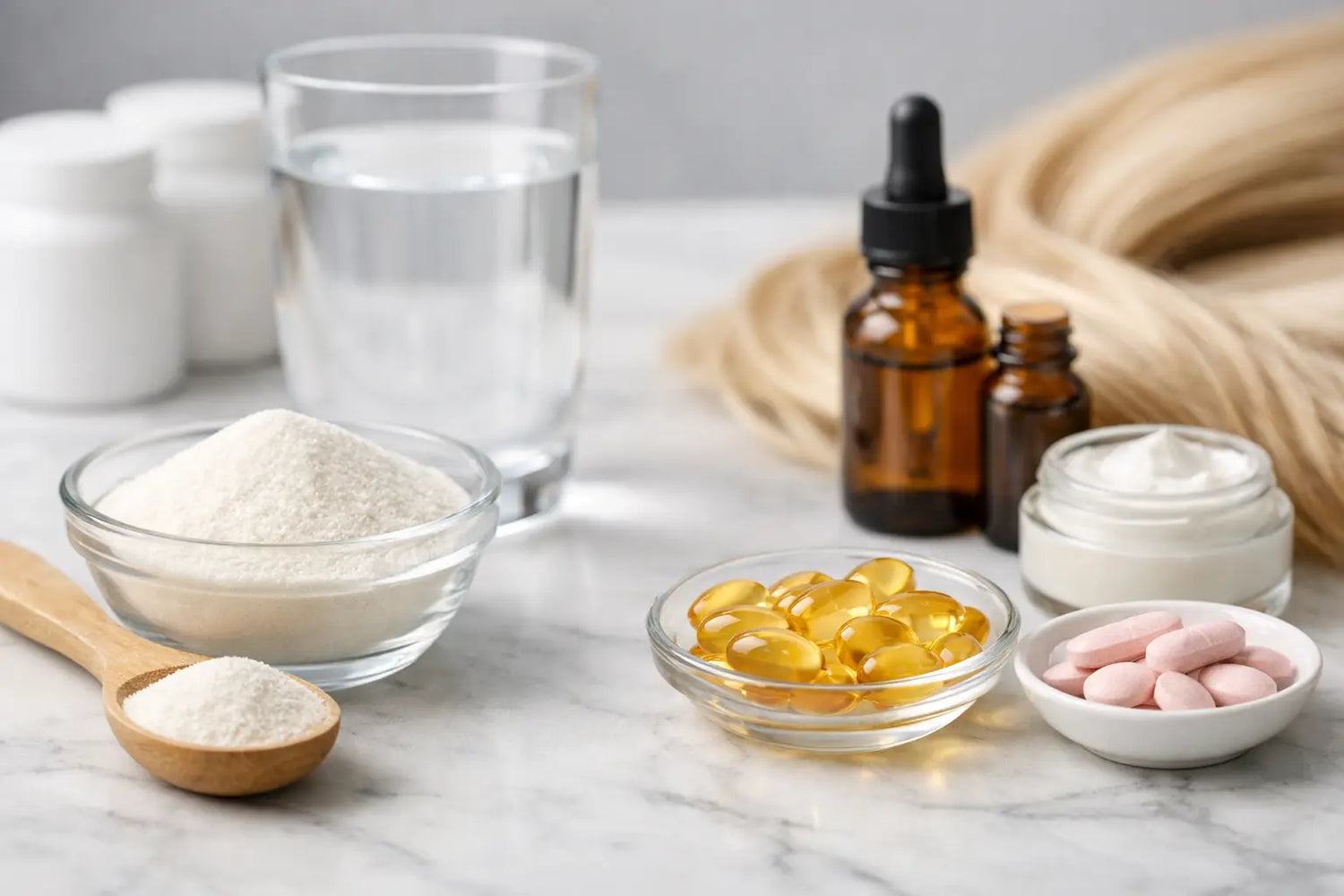
A new hair supplement can feel like a small promise of control when your brush is collecting more strands than usual, your nails keep peeling, or your skin looks tired after a stressful month. But collagen peptides vs biotin is not really a battle between two miracle ingredients. They support different processes, and the better choice depends on what your body may actually need.
If you want a routine that feels calm, simple, and worth sticking with, start by matching the supplement to your goal instead of buying the loudest label. Here is how to make a more confident call for your hair, skin, and nails.
Collagen Peptides vs Biotin: The Core Difference
Collagen peptides are small, digestible pieces of collagen protein. Collagen is a structural protein found throughout the body, including the skin, bones, tendons, and connective tissue. As we age, natural collagen production declines. Sun exposure, smoking, chronic stress, poor sleep, and low overall protein intake can also affect how skin looks and feels over time.
Biotin, also called vitamin B7, is a water-soluble B vitamin. It helps the body convert food into energy and plays a role in healthy hair, skin, and nails. Your body needs biotin, but needing it and needing a high-dose biotin supplement are two different things. True biotin deficiency is uncommon in otherwise healthy adults who eat a varied diet.
In practical terms, collagen peptides are usually chosen for broader skin-support goals, such as hydration, elasticity, and the appearance of fine lines, with possible benefits for nail strength and joint comfort. Biotin is most relevant when a deficiency or very limited diet may be contributing to brittle nails or hair concerns.
Neither option can single-handedly reset hair shedding driven by hormones, thyroid changes, iron deficiency, postpartum shifts, medications, genetics, or ongoing stress. That is not a reason to feel discouraged. It is a reason to use supplements as one helpful part of a bigger, more realistic plan.
What Collagen Peptides May Help With
Research on oral collagen peptides is most encouraging for skin hydration and elasticity. In studies, people often take collagen consistently for several weeks or months before noticing changes. The effect is generally gradual, not dramatic overnight, which is exactly why consistency matters more than chasing a new product every few days.
Collagen can also be a practical option if your beauty goals overlap with everyday body support. Some people choose it for nails that tend to split, skin that feels less resilient, or joints that feel achy after active days. Because it is a source of protein, it may fit naturally into a morning coffee, smoothie, yogurt, or oatmeal routine.
That said, collagen is not a complete protein, so it should not replace protein-rich meals. Think of it as an add-on, not the foundation. Eggs, Greek yogurt, fish, chicken, tofu, beans, lentils, and other protein sources still do the heavier lifting for overall hair and tissue health.
For most products, a daily serving falls somewhere around 2.5 to 10 grams of hydrolyzed collagen peptides. There is no need to assume that a larger scoop automatically creates better results. A dose you can comfortably use every day is more valuable than an expensive routine that becomes another unfinished task on your counter.
A good fit for collagen peptides
Collagen peptides may make sense if your main focus is skin hydration and firmness, you want extra support for nails or joints, or you are looking for an easy way to add protein to an existing morning ritual. They can be especially appealing when your goal is a steady beauty-from-within routine rather than a quick fix for a sudden health change.
What Biotin May Help With
Biotin is often marketed as the go-to vitamin for hair growth, but the story is more nuanced. If someone is truly low in biotin, supplementation can help correct symptoms that may include thinning hair, skin changes, and brittle nails. But for people who already get enough biotin through food, evidence that extra-high doses create longer, thicker hair is limited.
Biotin is found in everyday foods such as eggs, salmon, nuts, seeds, legumes, and whole grains. People may be more likely to have low biotin intake or absorption with a highly restrictive diet, certain digestive conditions, long-term heavy alcohol use, or specific medications. This is where personalized guidance matters more than a one-size-fits-all beauty routine.
There is also a safety detail worth taking seriously: high-dose biotin can interfere with certain lab tests, including some tests used to assess thyroid function and heart-related markers. If you take a biotin supplement, tell your clinician before blood work. They can advise you on whether and when to pause it.
A good fit for biotin
Biotin may be worth discussing with a healthcare professional if you have brittle nails alongside signs that point to a possible nutrient issue, eat a very limited diet, or have been told you may be deficient. It is less compelling as a default choice for every hair concern, especially if shedding began suddenly or feels significant.
Which Is Better for Hair Growth?
For most people, neither collagen nor biotin is the whole answer to hair growth. Hair is sensitive to what is happening beneath the surface. A stressful season, rapid weight loss, low iron, not eating enough protein, illness, hormonal changes, or a major life transition can all shift the hair growth cycle.
If your hair concern is general breakage, dryness, or a desire to support healthier-looking skin and nails at the same time, collagen peptides are often the more versatile choice. They can fit into a balanced routine built around adequate protein, hydration, sleep, and gentle hair care.
If you suspect a deficiency, biotin may be relevant, but it is best viewed as targeted support rather than a universal hair-growth solution. More is not always more. In fact, a simpler supplement plan is often easier to evaluate because you can tell what is helping and what is just adding noise.
How to Choose Without Overcomplicating Your Routine
Start with the outcome you care about most. For skin hydration, elasticity, and a broader beauty-and-body routine, collagen peptides are usually the more natural place to begin. For a suspected nutrient gap or brittle nails with dietary restrictions, biotin may deserve a closer look with professional input.
Then make the routine easy enough for real life. Add collagen to something you already do, like making coffee or breakfast, instead of creating a separate wellness chore. If you choose biotin, check the amount on the label and avoid stacking it with multiple hair, skin, and nail products that may already contain it.
Finally, give your routine a fair window. Take a quick photo of your nails or skin at the start, notice how your energy and meals are supporting you, and reassess after eight to twelve weeks. Hair grows slowly, and the goal is not perfection. The goal is a routine that helps you feel more supported and more in control.
The Often-Missed Foundation: Food, Stress, and Recovery
Supplements work best when they are not asked to compensate for a body running on empty. If your meals are irregular, your sleep has been disrupted for months, or stress is keeping your nervous system on high alert, your hair and skin may be reflecting that load.
A more supportive reset can be surprisingly basic: eat protein regularly, include colorful produce and iron-rich foods, drink enough water, and create one small wind-down cue before bed. That could be putting your phone on charge outside the bedroom, making herbal tea, or writing down tomorrow's three priorities so your mind does not have to hold them overnight.
If you are experiencing patchy hair loss, sudden heavy shedding, scalp pain, fatigue, unexplained weight changes, or symptoms that concern you, reach out to a qualified healthcare professional. Those signs deserve more than a supplement experiment.
The best choice is the one that fits your real goal and your real life. Whether you choose collagen peptides, biotin, or neither for now, let your routine be a form of steady care - not another standard you have to keep up with.



Leave a comment
This site is protected by hCaptcha and the hCaptcha Privacy Policy and Terms of Service apply.