

Skin can look less firm for reasons that have little to do with your skincare shelf. A hectic month, inconsistent sleep, more sun exposure than usual, dehydration, or a major shift in hormones can all show up in the mirror. The good news is that natural ways to support skin firmness do not need to become another complicated project. Small, repeatable habits can help your skin get the support it needs from the inside out.
Skin firmness is not about chasing a filtered version of your face or body. It is about supporting skin that feels comfortable, resilient, and well cared for. You cannot stop natural aging, and no food or facial massage can replace the effect of a medical treatment when laxity is significant. But you can protect collagen, support healthy skin structure, and build a routine that produces real-life results over time.
Natural Ways to Support Skin Firmness: Start With Foundations
Firm-looking skin depends on more than collagen alone. Collagen and elastin give skin much of its structure and bounce, while hydration, a healthy skin barrier, circulation, and overall body composition influence how smooth and supported it appears. These systems respond best to consistency, not a two-day reset.
Think of your routine as a few steady signals to your body: nourish me, protect me, let me recover, and help me move. That approach is kinder to your schedule and more useful than buying several products you will not enjoy using.
Protect skin from daily UV exposure
Sun exposure is one of the biggest external contributors to visible collagen breakdown. UV rays can reach your skin on regular errands, school drop-off, dog walks, and through windows when you spend time near them. You do not need to fear daylight, but daily protection is one of the most practical long-term investments you can make for skin firmness.
Use a broad-spectrum SPF 30 or higher on exposed skin when you will be outdoors, and reapply as directed if you are spending extended time in the sun or sweating. Hats, sunglasses, and shade add another helpful layer. If sunscreen feels like a chore, keep one beside your toothbrush or next to your keys so it becomes part of the routine you already have.
Eat enough protein, not just "healthy" foods
Your body needs amino acids to make and repair proteins, including the proteins involved in skin structure. Under-eating, skipping meals all day, or relying mostly on snack foods can make it harder to meet your needs, especially during stressful seasons when your body has more competing priorities.
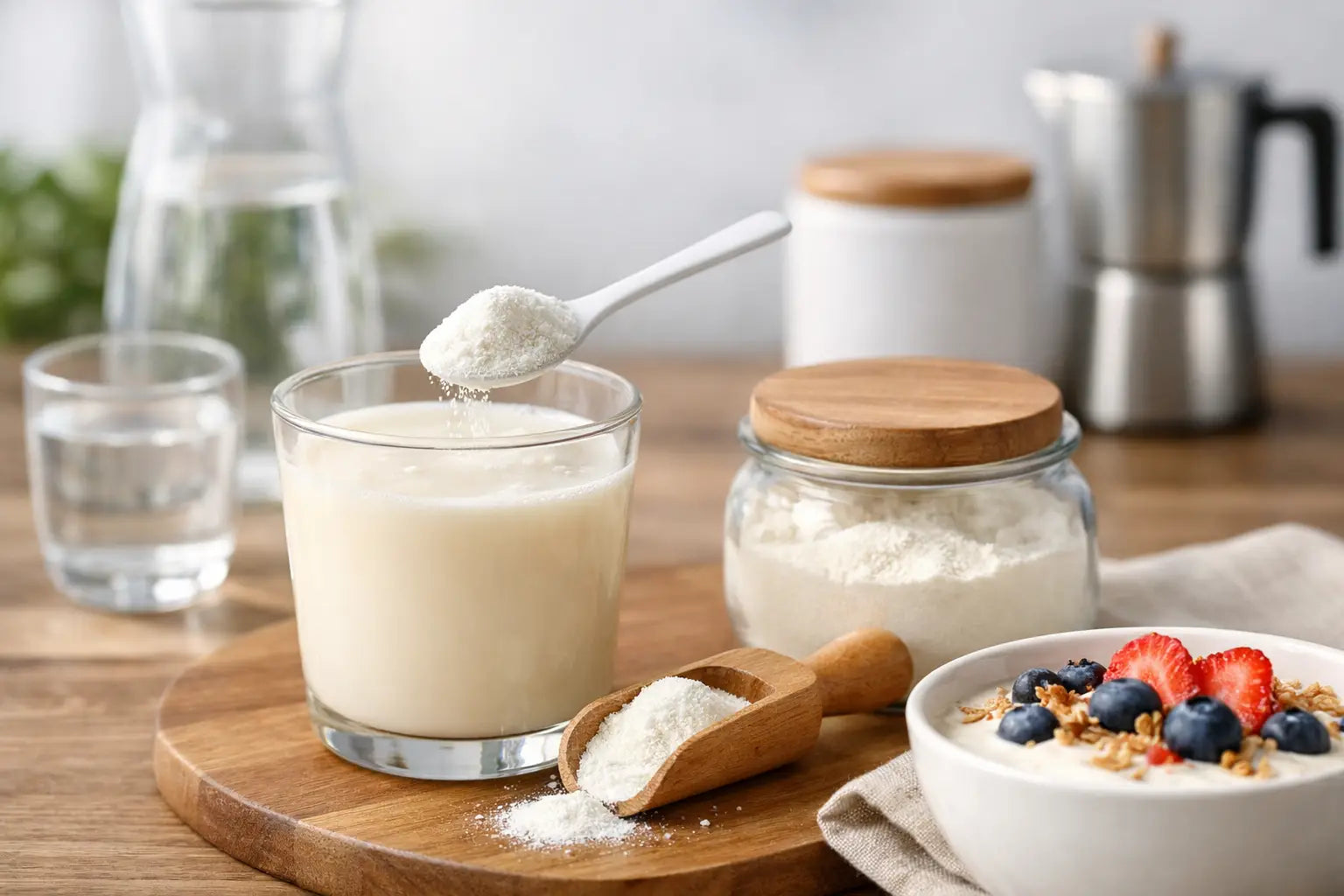
Try building meals around a protein source you genuinely like: eggs, Greek yogurt, fish, chicken, tofu, beans, lentils, cottage cheese, or a protein-rich smoothie. The right amount varies based on your body size, activity level, age, health needs, and whether you are pregnant or breastfeeding. The goal is not perfection. It is giving your meals enough substance that your skin and the rest of you are not running on empty.
Pair protein with colorful produce. Vitamin C helps support collagen production, so foods such as berries, citrus, kiwi, bell peppers, broccoli, and tomatoes are especially useful additions. Healthy fats from avocado, olive oil, nuts, seeds, and fatty fish can also support the skin barrier and make meals more satisfying.
Hydrate for comfort and skin-barrier support
Drinking water will not magically tighten loose skin, but dehydration can make fine lines and dullness look more noticeable. Hydration supports circulation and helps your body function well overall. It also works best alongside electrolytes, nourishing meals, and a healthy skin barrier, not as an isolated gallon-a-day challenge.
A simple check-in works better than forcing a number: keep water within reach, drink with meals, and notice whether you are regularly thirsty or your urine is consistently dark. If plain water is boring, add fruit, use a favorite tumbler, or include hydrating foods like soups, fruit, and yogurt. For many busy people, convenience is the habit that finally sticks.
Build Strength for More Than Muscle Tone
Strength training is an often-overlooked way to support the appearance of firm, healthy skin. Building and maintaining muscle can improve body composition and create a more supported look beneath the skin, especially as we age. It also benefits bone health, balance, mood, and metabolic health.
You do not need an intense gym plan to begin. Two or three sessions a week of bodyweight movements, resistance bands, dumbbells, or a beginner strength class can make a meaningful difference over time. Focus on foundational movements such as squats or sit-to-stands, rows, presses, hinges, and carries. Start at a level that feels safe and repeatable.
There is a trade-off worth knowing: rapid weight loss can sometimes make skin looseness more noticeable, particularly after a larger change. Slow, sustainable progress, adequate protein, and strength training may be more supportive than aggressive restriction. Loose skin after weight loss is common and not a personal failure. Genetics, age, the amount of weight lost, and how long the skin was stretched all matter.
Make Sleep and Stress Care Part of Your Skin Routine
Your skin does a great deal of repair work while you sleep. One short night will not undo your progress, but chronic sleep disruption can affect inflammation, recovery, appetite, and the way you feel in your body. When life is full, a perfect bedtime may not be realistic. A calmer wind-down is still available.
Try a 10-minute evening reset: dim the lights, put your phone on charge outside the bed if possible, wash your face, and choose one low-stimulation activity such as stretching, reading, or writing down tomorrow's tasks. This is not about being rigid. It is about giving your nervous system a clear signal that it can come down a notch.
Stress also deserves a place in any conversation about skin. High stress does not cause every breakout, line, or change in texture, but it can influence sleep, inflammation, habits, and hormone-related symptoms. A daily walk, a few slow breaths before meals, therapy, time outside, or a simple journal practice can be supportive. Choose the tool that makes you feel more regulated, not another wellness task you feel guilty about missing.
Use Skincare That Supports, Not Overwhelms
A gentle routine can complement your lifestyle habits. Cleanse in a way that does not leave your skin tight or stinging, use a moisturizer that supports your barrier, and wear sunscreen consistently. If you want an evidence-informed active ingredient, retinoids are commonly used to support collagen and improve the look of fine lines over time. They can be irritating at first, so start slowly and follow product guidance.
Do not introduce several strong products at once. Over-exfoliating, scrubbing aggressively, or layering multiple acids can irritate the skin barrier and leave skin looking more reactive, dry, and uncomfortable. Firmness goals are long-term goals. Calm, supported skin is a better foundation than constantly chasing a stronger treatment.
If you are pregnant, trying to conceive, breastfeeding, managing eczema or rosacea, or using prescription skin treatments, check with a qualified clinician before adding actives or supplements. Seek medical advice for sudden skin changes, unexplained swelling, rashes, or other symptoms that concern you.
A Simple Seven-Day Reset to Begin
Instead of changing everything, choose one action from each area for the next week: apply SPF before leaving home, add a protein source to breakfast, fill your water bottle twice, complete two short strength sessions, and create a 10-minute wind-down on most nights. Keep the bar low enough that you can meet it during a busy Tuesday, not only on your most organized Sunday.
At NATFUL, we believe wellness works best when it helps you feel more in control of real life. Supporting your skin is not a punishment or a race against time. It is a quiet practice of meeting your body with nourishment, protection, movement, and rest - then letting those choices add up.

Leave a comment
This site is protected by hCaptcha and the hCaptcha Privacy Policy and Terms of Service apply.