
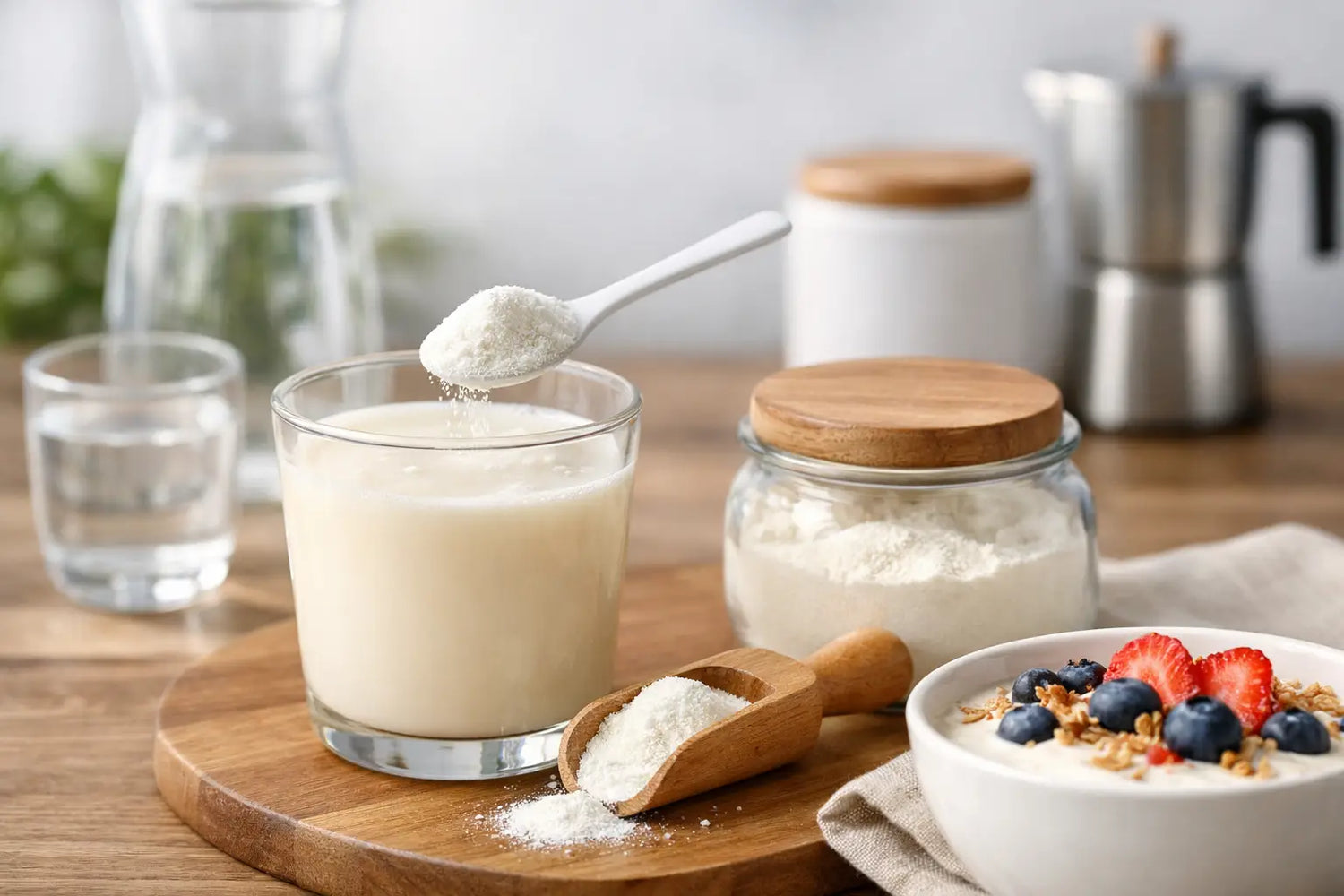
Your collagen routine should not become another decision waiting for you at 7 a.m. The simplest answer to how to use collagen powder daily is to pair it with something you already do: pour your morning coffee, blend your usual smoothie, or make breakfast for the family. Consistency matters far more than finding a perfect time, recipe, or complicated wellness ritual.
Collagen can fit beautifully into a beauty-from-within routine, especially if you are looking for practical support for skin, hair, nails, and joint comfort. But it works best when it is part of a bigger real-life reset: enough protein, regular meals, hydration, sleep where you can get it, and a routine that does not ask too much of you.
Start With the Scoop and the Label
Most collagen powders are made from hydrolyzed collagen, also called collagen peptides. The protein has been broken into smaller pieces so it dissolves more easily in liquids and foods. A typical serving provides roughly 5 to 10 grams of collagen peptides, though the right amount for you is the serving size on your chosen product's label.
Start there rather than doubling up because you want faster results. More is not automatically better, and a daily routine you can maintain is more useful than an ambitious plan you abandon after four days. If you are new to collagen, taking one serving daily for several weeks gives you a clearer sense of how it feels in your routine.
Unflavored powders are often the most flexible because they can disappear into savory and sweet foods. Flavored options can make the habit easier if you prefer a quick drink, but check the ingredient list for sweeteners or flavors that do not agree with you. If you follow a vegetarian or vegan diet, remember that conventional collagen is animal-derived. Plant-based products may support nutrients involved in collagen production, but they are not collagen itself.
How to Use Collagen Powder Daily in Real Life
The best delivery method is the one you will actually repeat. Collagen powder is generally easy to stir into warm drinks, blend into cold drinks, or mix into foods with a little moisture and texture. You do not need a special shaker bottle, a curated kitchen counter, or ten extra minutes.
Add It to Your Morning Drink
Coffee is a favorite for a reason: it is already part of many mornings. Stir collagen into hot coffee after brewing, then add milk or a creamer as usual. A small handheld frother can help with a smoother texture, although a spoon works for many powders.
Tea, matcha, and warm lemon water can work too. If you use a cold drink, blend or shake it more thoroughly. Collagen can clump in ice-cold liquid when it is simply stirred with a spoon, so add the powder before the ice or use a blender bottle.
Blend It Into Breakfast
A smoothie is an easy option when mornings are rushed or appetite is low. Add collagen alongside fruit, yogurt, milk, oats, nut butter, or whatever you already use. This makes collagen feel like a small part of breakfast instead of a separate wellness task.
It can also be mixed into oatmeal, overnight oats, yogurt, chia pudding, pancake batter, or a protein bowl. Choose a food with enough flavor and texture to make the addition feel effortless. If you are sensitive to changes in texture, start with smoothies or oatmeal rather than plain water.
Use It in an Afternoon or Evening Routine
Daily does not have to mean morning. If you are managing school drop-offs, medication schedules, back-to-back meetings, or an unpredictable appetite, the afternoon may be your most reliable anchor. Mix collagen into an iced latte, a yogurt snack, or a simple smoothie when your energy starts to dip.
An evening routine works just as well. Stir it into decaf tea, hot cocoa, soup, or a warm bowl of oatmeal. There is no proven magic hour for collagen that outweighs your ability to stay consistent. Pick the moment that feels calmest and least likely to be skipped.
Timing Matters Less Than Consistency
You may see advice saying collagen must be taken on an empty stomach, after a workout, or alongside vitamin C. These ideas can make a simple habit feel unnecessarily high-stakes.
Collagen is protein, so you can take it with or without food. Taking it with a meal may be more comfortable if supplements tend to bother your stomach. After exercise is also fine if it helps you remember, particularly when you are already making a post-workout shake.
Vitamin C plays a role in your body's own collagen synthesis. That does not mean you need to take a vitamin C supplement with every scoop. Eating a generally varied diet with foods such as berries, citrus, bell peppers, tomatoes, broccoli, and leafy greens can support the bigger picture. If breakfast is coffee and collagen only, consider adding fruit or another nourishing food later rather than trying to engineer one perfect drink.
What Results Can You Realistically Expect?
Collagen is not an overnight fix for dull skin, shedding hair, joint pain, or the effects of chronic stress. Research on collagen peptides suggests potential benefits for skin hydration and elasticity, and some people notice improvements in nail strength or joint comfort. Individual results vary, and the changes tend to be gradual.
Give your routine at least 8 to 12 weeks before judging it. Take a simple monthly photo in the same light if your goal is skin appearance, or make a short note about how your nails, joints, or overall routine feel. This is more useful than scrutinizing your reflection every morning.
It also helps to keep expectations realistic. Collagen cannot replace adequate dietary protein, sunscreen, sleep, medical care, or treatment for an underlying health concern. If you have sudden hair loss, persistent joint symptoms, significant digestive issues, or skin changes that worry you, talk with a qualified healthcare professional instead of relying on a supplement alone.
Make the Habit Easier on Overwhelmed Days
A collagen routine becomes reliable when it removes friction. Keep the container near the coffee maker, blender, or mug cabinet, not hidden in the back of a pantry. Put a spoon in the container if that makes the next step more obvious. If you leave for work early, portion a serving into a small container the night before.
You can also connect collagen to a cue you already have. For example: when the coffee starts brewing, add the scoop; when you pack lunches, make your smoothie; when you settle in for your evening show, prepare your warm drink. This kind of habit pairing is especially helpful when you are stressed, mentally overloaded, or managing an ADHD-style brain that needs visible reminders rather than good intentions.
Avoid the all-or-nothing trap. Missing a day does not erase your progress, and you do not need to take extra the next day to catch up. Return to your usual serving at the next natural opportunity. A supportive wellness routine should help you feel more in control, not give you another reason to feel behind.
Safety and Smart Considerations
Collagen is generally well tolerated, but some people experience mild bloating, fullness, or an aftertaste. Try taking it with food, using a smaller amount for a few days, or switching the recipe before deciding it is not for you. Check the source if you have allergies, especially to fish, shellfish, eggs, or beef, depending on the product.
If you are pregnant, breastfeeding, managing kidney disease, following a medically prescribed protein limit, taking medications, or living with a health condition, ask your clinician or registered dietitian before starting a new supplement. Choose products with transparent ingredient lists, and do not assume a beauty-focused label means it is right for every body.
Let your collagen habit be one small act of care, not another standard to meet. A scoop in the drink or meal you already enjoy can be enough to support a steadier routine - and sometimes that kind of simplicity is what makes a wellness reset last.



Leave a comment
This site is protected by hCaptcha and the hCaptcha Privacy Policy and Terms of Service apply.