
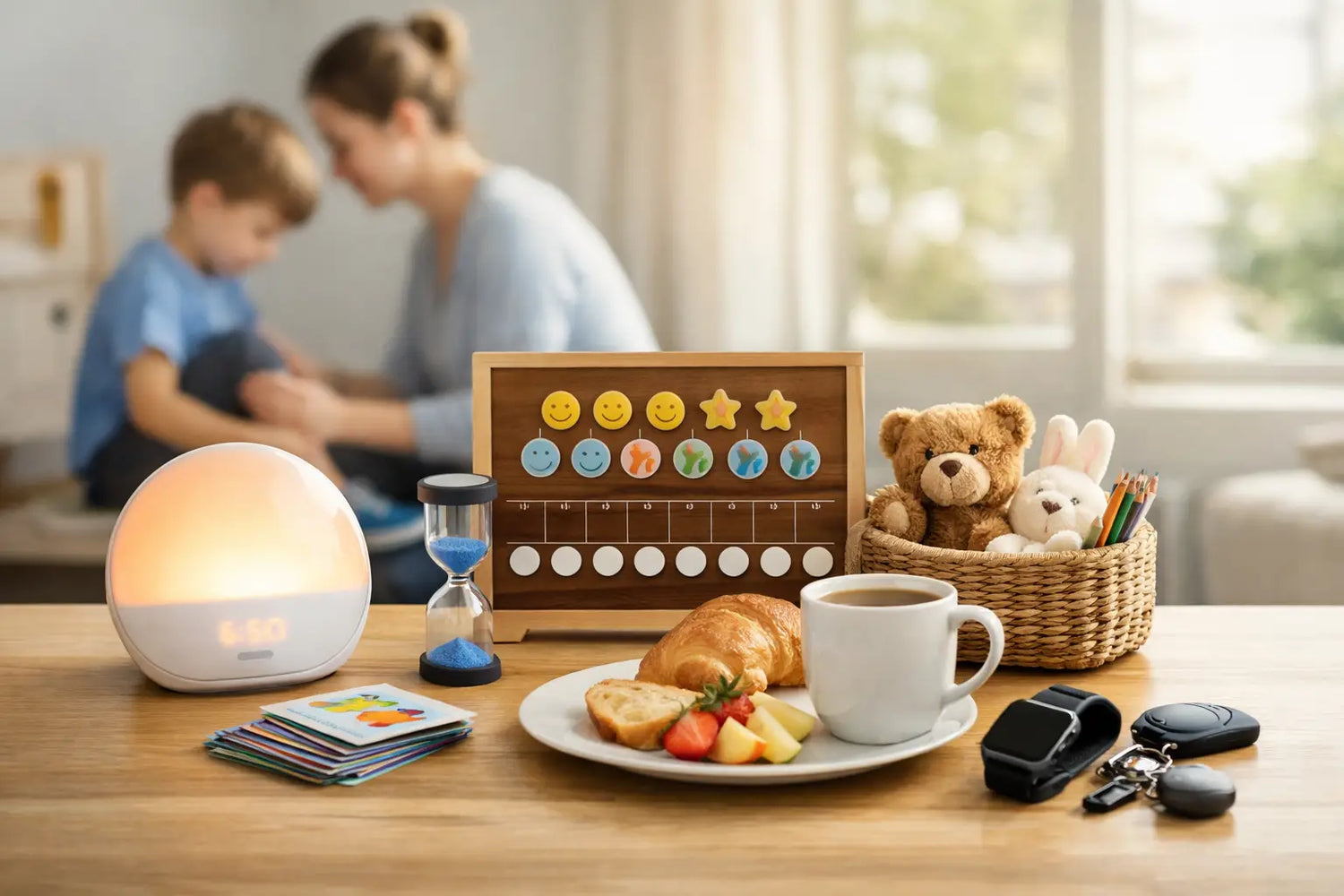
The hardest part of the day often happens before 8 a.m. Someone cannot find a shoe, someone else is melting down over breakfast, and you are trying to stay calm while mentally tracking the clock. That is exactly why parenting tools for calmer mornings matter. They do not make family life perfect, but they can make it feel far less chaotic.
A calmer morning routine is not about becoming stricter or more productive. It is about reducing friction so your home feels more regulated from the start. The most effective tools are usually simple, visible, and easy to repeat, especially when everyone is tired, distracted, or already overstimulated.
Why parenting tools for calmer mornings actually work
Most stressful mornings are not caused by one big problem. They are usually the result of too many tiny decisions happening at once. What should the kids wear? Is lunch packed? Where is the water bottle? Why is brushing teeth suddenly a negotiation?
When routines live only in a parents brain, mornings become management-heavy. That increases stress for you and often creates more resistance from kids. Good tools shift some of that mental load out of your head and into the environment. A visual checklist, a set place for school items, or a consistent wake-up sequence can do more than repeated reminders ever will.
That does not mean every family needs the same system. A household with toddlers needs something different from a household with elementary-aged kids. Neurodivergent children may do better with visual structure and fewer verbal prompts. A parent who also struggles with overwhelm may need tools that feel realistic, not Pinterest-perfect. The goal is not more systems. The goal is less morning decision fatigue.
1. A visual morning routine chart
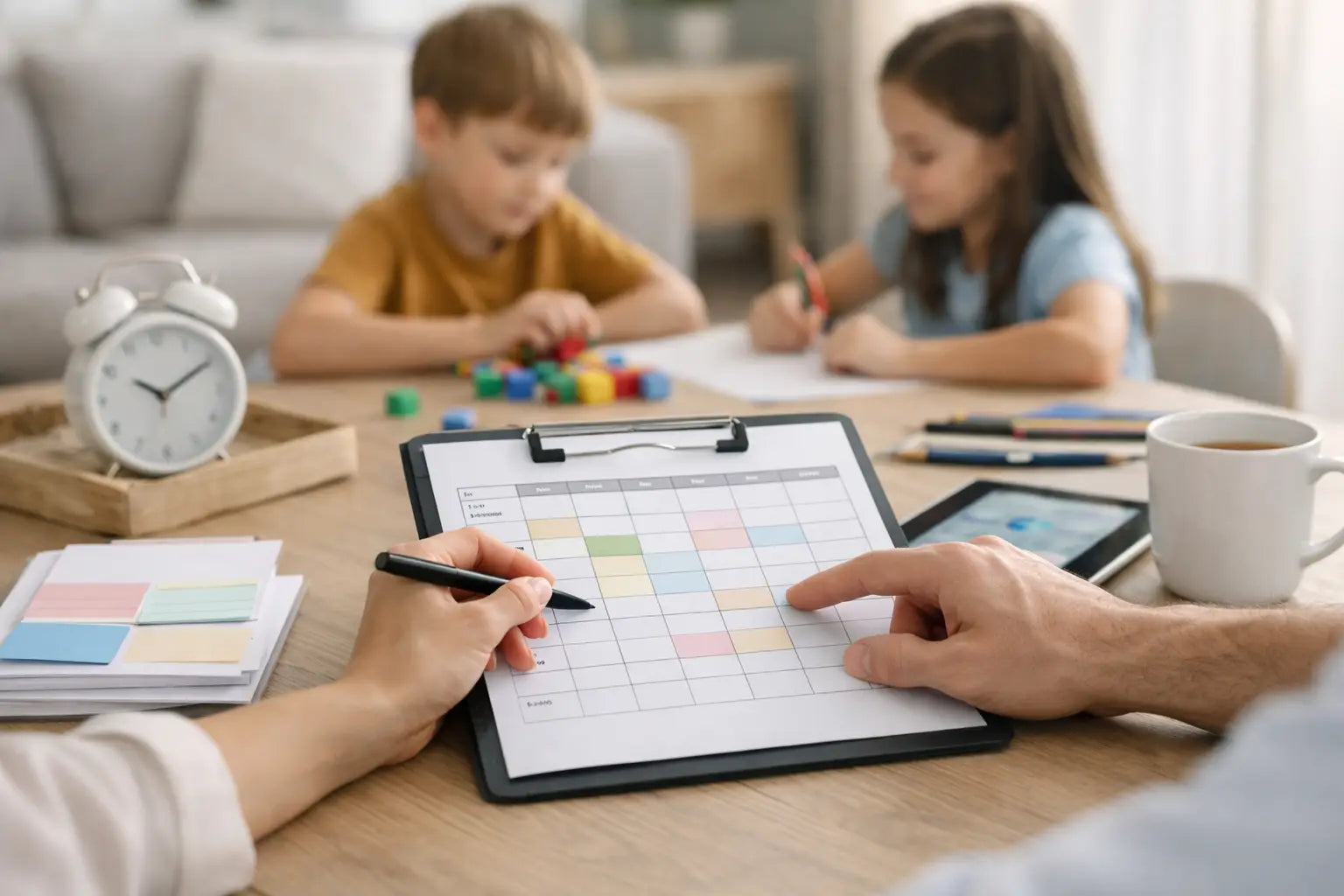
If your mornings depend on you saying the same five things over and over, a visual chart can be a reset. Kids respond well when they can see what comes next. It lowers power struggles because the routine is no longer coming only from you.
For younger children, use pictures for basics like get dressed, eat breakfast, brush teeth, shoes on, backpack by the door. For older kids, a written checklist often works better because it feels more age-appropriate and gives them a sense of ownership.
The important part is keeping it short. If the chart includes every tiny detail, it becomes wallpaper. Focus on the non-negotiables and place it where the morning actually happens, like the kitchen, hallway, or bedroom door.
Make the chart a support, not a threat
A routine chart works best when it is neutral. Instead of using it to pressure or correct, use it as a calm reference point. "Whats next on your chart?" usually lands better than "How many times do I have to tell you?"
2. A night-before setup that removes friction
Calm mornings often begin the night before. This is not glamorous advice, but it works because it cuts down on last-minute scrambling.
Lay out clothes. Pack lunches as much as possible. Refill water bottles. Put backpacks, library books, and shoes in one designated zone. If you take medication, supplements, or need your own quick breakfast ready to go, set that up too. Parents often focus on getting the kids ready while forgetting that their own regulation matters just as much.
This tool is especially helpful when mornings are tight or your child struggles with transitions. If getting dressed becomes a battle, offering two pre-approved outfit choices the night before can reduce conflict without creating a new decision point in the morning.
3. A launch pad by the door
There is a reason mornings feel chaotic when items are scattered across the house. A launch pad is simply one consistent place for the essentials that leave with you. Think backpacks, shoes, jackets, keys, lunch bags, and anything school-related.
It sounds small, but this is one of the most practical parenting tools for calmer mornings because it removes the frantic search spiral. Instead of asking where everything is, everyone knows where to look.
The key is making the zone easy to maintain. A basket, a few hooks, or a low shelf is usually enough. You do not need a full mudroom makeover. You need less visual confusion and fewer missing-item emergencies.
4. A predictable wake-up rhythm
Many morning struggles begin with a jarring start. If kids are being pulled from deep sleep and immediately rushed, the whole day can start dysregulated.
A predictable wake-up rhythm helps the nervous system catch up. That might mean opening curtains, turning on soft music, giving a two-minute cuddle, or using the same gentle sequence each day. Some kids need physical connection first. Others need quiet and space. Paying attention to that can change the tone of the entire morning.
This is one of those areas where perfection is not the point. You may not have a slow, cozy wake-up every day. But even a 3-minute buffer between sleep and demands can help kids transition with less resistance.
If your child is highly sensitive or neurodivergent
Start with fewer words. Too much talking first thing can feel overwhelming. Visual cues, gentle lighting, and one instruction at a time are often more effective than a stream of reminders.
5. A simple breakfast formula
Breakfast does not need to be exciting to be helpful. What it does need to be is predictable enough that it does not create another daily negotiation.
A simple formula can reduce stress fast. Think protein plus fiber plus something familiar. That could look like eggs and toast, Greek yogurt with fruit, oatmeal with nut butter, or a smoothie with a side of dry cereal if that is what your child will actually eat.
Some kids wake up hungry. Others need time before they can eat. It helps to notice patterns instead of forcing one ideal routine. A child who resists a full breakfast may do better with a small first option and a packed snack for later. The calmer choice is often the one that respects appetite and sensory preferences while still giving the body some support.
For parents, this matters too. Skipping your own nourishment can make you more reactive, less patient, and more drained by 9 a.m. If mornings are a pressure point, a grab-and-go breakfast for yourself is not extra. It is part of the system.
6. A calm cue instead of constant reminders
Repeated verbal prompting can turn mornings into background noise. After a while, kids stop hearing it, and parents start sounding more stressed. A calm cue gives the routine a signal without requiring so much talking.
That cue could be a kitchen timer, a specific playlist, a color-changing clock, or one consistent phrase like "backpacks in five." The point is not to create urgency for the sake of urgency. It is to create a shared rhythm that feels predictable.
This works especially well for kids who lose track of time or struggle to shift between tasks. It also helps parents stay out of lecture mode. You are not constantly escalating. You are simply returning to the cue.
7. A tiny reset plan for when the morning goes sideways
Even the best systems will not prevent every rough morning. Someone will be sick, tired, emotional, or off schedule. That does not mean your tools are failing. It means you are living with real humans.
A reset plan keeps one hard morning from becoming a hard whole day. Make it very simple. Maybe it is three deep breaths in the car, a quick apology if voices got sharp, or one reassuring sentence like "That was a tough start, but we can reset from here." Kids do not need perfect parents in the morning. They need parents who can repair and re-center.
This matters for you too. If you tend to carry morning stress into the rest of the day, build in a 60-second transition after drop-off. Sip water. Unclench your jaw. Put your hand on your chest and let your body catch up. Calm is easier to create when you are not running on leftover adrenaline.
How to choose the right parenting tools for calmer mornings
Start with the moment that breaks down most often. If the problem is getting out the door, focus on the launch pad. If it is repeated nagging, start with a visual chart or calm cue. If everyone is rushed from the start, work on the wake-up rhythm and night-before prep.
Trying to change everything at once usually creates more stress, not less. Pick one tool, use it consistently for a week, and notice what shifts. The best morning routine is not the most impressive one. It is the one your family can actually stick with when life feels full.
At NATFUL, we believe practical wellness works best when it fits real life. A calmer morning is not about controlling every detail. It is about creating just enough structure that your family can move through the day feeling more steady, more supported, and a little more in control.
If tomorrow morning has been feeling heavy lately, start smaller than you think. One chart, one basket, one gentler wake-up. Sometimes that is all it takes to change the tone of the whole house.


Leave a comment
This site is protected by hCaptcha and the hCaptcha Privacy Policy and Terms of Service apply.