

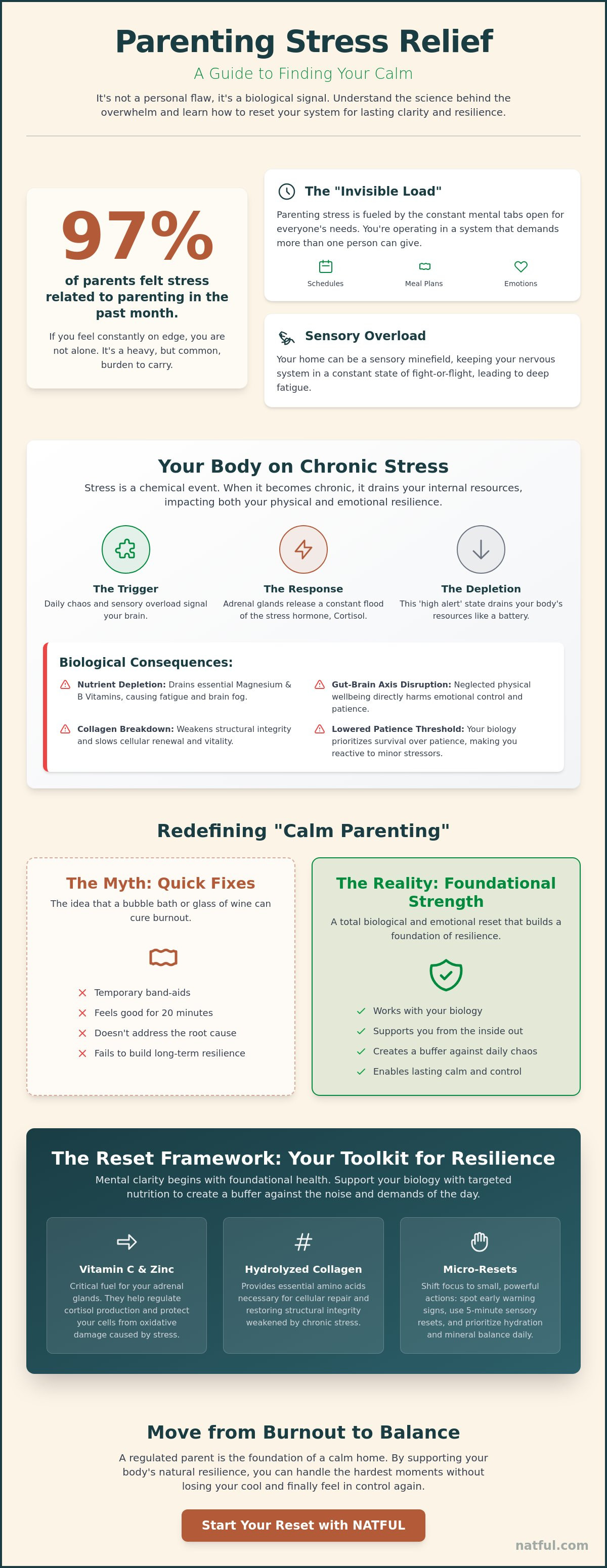
A recent national survey found that 97% of parents of children under 18 felt stress related to parenting in the past month. If you feel like you're constantly on edge, you aren't alone. It's a heavy burden to carry. This parenting stress relief guide is here to help you set that burden down. You're likely tired of the guilt that follows a sudden outburst. You're exhausted by the physical fatigue and the sensory overload of a noisy home. You aren't broken; you're just out of alignment.
You deserve to feel physically resilient and emotionally steady. This isn't about just getting by. It's about a total biological and emotional reset. We'll show you how to move from the brink of burnout toward a state of lasting clarity. You'll learn how to handle the hardest moments without losing your cool. By the end of this guide, you'll have the tools to create a calmer home environment and finally feel in control of your life again. Let's start the journey back to your natural state of calm.
Key Takeaways
- Shift your perspective by viewing stress as a biological state rather than a personal flaw.
- Understand how the gut-brain axis and chronic cortisol impact your emotional reactivity and physical strength.
- Replace the myth of the "perfectly calm parent" with the reality of effective, intentional emotional regulation.
- Use this parenting stress relief guide to master Micro-Resets that halt the cycle of sensory overwhelm.
- Learn to spot your body's early warning signs so you can return to your natural baseline of calm every day.
Understanding the Modern Parenting Stress Cycle
Parenting stress isn't a character flaw. It is a biological signal. Your body is telling you that the demands of your environment have exceeded your internal resources. Many parents feel a deep sense of shame when they snap at their children or feel a sense of dread when the morning starts. This shame is misplaced. Clinical tools like the Parenting Stress Index help professionals measure this pressure, but you feel it in your bones every day. It's the "invisible load." It's the constant mental tabs open for school schedules, meal planning, and emotional regulation. This is why this parenting stress relief guide focuses on the body first. When standard stress becomes chronic, it shifts into parental burnout. You aren't failing. You are simply overstimulated and under-supported.
This cycle is often invisible to those outside your home. You manage the logistics. You carry the emotional weight of every family member. Eventually, the weight becomes too much to bear. Your patience thins. Your energy vanishes. You aren't broken; you are simply operating in a system that demands more than any one person can give. Recognizing this is the first step toward finding your calm. You need tools that work with your biology, not against it.
The Impact of Sensory Overload and Neurodiversity
Your home is a sensory minefield. The sound of a television, the sticky touch of a toddler, and the visual clutter of toys create a constant hum of noise. For neurodivergent parents, particularly those with ADHD or Autism, this input is amplified. Your nervous system stays in a permanent state of fight or flight. It's hard to be a "gentle parent" when your brain is screaming for quiet. Modern living doesn't offer the natural breaks our ancestors had. Instead, we face a relentless stream of digital and physical demands that keep us on edge. This constant stimulation leads to deep nervous system fatigue.
Why Traditional Self-Care Often Fails Parents
We've been told that a glass of wine or a bubble bath is the cure for burnout. These are temporary band-aids. They don't address the root cause of your exhaustion. Surface-level relaxation feels good for twenty minutes, but it doesn't build resilience. This parenting stress relief guide advocates for foundational strength over quick fixes. We need to support your biology so you don't hit a breaking point in the first place. A five-minute sensory reset or a targeted nutritional shift is often more effective than a monthly spa day. Real relief comes from returning to basics and aligning your body with your environment. It’s about building a foundation that can withstand the daily chaos.
The Biological Foundation: How Your Body Handles Overwhelm
Stress is more than a feeling. It is a chemical event. When you face the daily chaos of a loud household, your brain signals your adrenal glands to release cortisol. This hormone is helpful in short bursts. It helps you react quickly. However, chronic parenting stress keeps cortisol levels high for far too long. This persistent state of "high alert" acts like a drain on your internal battery. It depletes your body of essential nutrients, specifically magnesium and B vitamins. When these reserves run dry, you experience the physical fatigue and brain fog often dismissed as "just being a parent." This parenting stress relief guide treats these symptoms as biological signals rather than personality traits.
Your emotional reactivity is deeply tied to your gut-brain axis. This is the two-way communication highway between your digestive system and your nervous system. If your physical wellbeing is neglected, your emotional control suffers. Your body prioritizes survival over patience. Chronic stress also targets your structural integrity. It breaks down essential proteins like collagen, which are vital for cellular renewal and overall vitality. When nutritional gaps go unaddressed, your biological patience threshold drops, making you reactive to minor stressors that you would otherwise handle with ease.
Nutritional Support for the Stressed Nervous System
Mental clarity begins with foundational health. Your adrenal glands require specific fuel to manage the stress response effectively. Vitamin C and Zinc are critical components of this fuel. They help regulate cortisol production and protect your cells from oxidative damage. Hydrolyzed bovine collagen provides the amino acids necessary for cellular repair. Instead of reaching for caffeine to mask exhaustion, consider a nutrition-first approach. Supporting your body from the inside out creates a buffer against the noise and demands of the day. You can find these essential ingredients in the NATFUL Hydrolyzed Bovine Collagen Peptides Powder, designed to support your body's natural resilience.
Restoring Your Baseline with Foundational Wellness
A calm home environment starts with a regulated parent. This regulation depends on mineral balance and proper hydration. Without these, your nervous system remains brittle. Amino acids are also crucial. They serve as the building blocks for neurotransmitters like serotonin and dopamine, which dictate your mood and focus. When you provide your body with these foundational tools, you raise your baseline. You become harder to rattle. NATFUL Hydrolyzed Bovine Collagen serves as a physical anchor in this process. It supports your body’s ability to recover and remain resilient.
- Hydration: Supports cognitive function and reduces irritability.
- Mineral Balance: Keeps your nervous system from firing too easily.
- Amino Acids: Essential for the production of "calming" brain chemicals.
By focusing on these biological basics, you move from a state of constant survival to one of intentionality and strength. You aren't just trying to "cope" with the chaos. You are building a body that is capable of handling it without breaking down. This is the difference between surviving parenthood and thriving within it.
Myth vs. Reality: Redefining "Calm Parenting"
There is a common image of the "calm parent" that often does more harm than good. It’s the idea of a person who never feels irritation or anger. This person is a myth. In reality, a calm parent isn't someone who lacks anger. They are someone who knows how to regulate it. When we chase the version of ourselves that never gets upset, we fall into the perfection trap. This trap fuels a cycle of anxiety and guilt. It makes us feel like failures every time we lose our cool. This parenting stress relief guide is about moving away from that impossible standard and returning to what is actually achievable.
Many parents believe that yelling is the only way to get children to listen. It feels like a necessary tool for survival in a loud, busy house. However, yelling usually signals that our own nervous system has reached its limit. It’s a reaction, not a strategy. We can choose to reframe discipline as teaching rather than punishing. Teaching requires a regulated brain. Punishment is often just a release of our own pent-up frustration. When we stop trying to be perfect, we can start being present.
The Yelling Cycle: Why It Happens and How It Breaks
When you lose control, you're experiencing an amygdala hijack. Your brain perceives your child's behavior as a threat to your safety. The logical part of your brain effectively shuts down. Stress is contagious. If you are vibrating with tension, your children will mirror that energy. You can break this cycle with a three-step internal check before you react. First, notice the physical sensation in your body. Second, name the feeling. Third, take one intentional breath. This small pause allows your prefrontal cortex to come back online so you can lead with clarity.
Emotional Regulation as a Skill, Not a Personality Trait
Staying calm is a muscle. It requires consistent training. You don't expect to run a marathon without practice. Why expect perfect patience without building the foundation? Self-compassion is the fastest route to regulation. If you do snap, focus on the repair. Apologizing to your child teaches them more about emotional health than being perfect ever could. This parenting stress relief guide emphasizes that you are learning a new skill. Be gentle with yourself as you build this resilience. Every successful "reset" is a win for your family unit. You are building foundational strength, one moment at a time.
The Reset Framework: Practical Steps for Daily Relief
Theory is helpful, but you need action when the noise levels peak. This parenting stress relief guide provides a structured framework to move from chaos to clarity in real time. You don't need a week away to find your center. You need a series of small, intentional shifts throughout your day. These steps aren't about adding more to your to-do list. They are about changing how you respond to the list you already have. By focusing on your biological and emotional state, you can stop the cycle of reactivity before it starts.
- Step 1: Identify Early Warning Signs. Your body speaks before you yell. Notice a tight chest, a clenched jaw, or a sudden heat in your face. These are signals to pause.
- Step 2: Implement a Micro-Reset. Use sensory grounding or specific breathing patterns to signal safety to your nervous system.
- Step 3: Address Physical Needs. Dehydration and low protein levels make you brittle. Reach for water and collagen-based nutrition to support your cellular resilience.
- Step 4: Use a Structured Guide. Don't try to think your way out of a crisis. Follow a proven roadmap like the Calm Parenting Reset™ to stay steady during hard moments.
- Step 5: Prioritize Low-Demand Periods. Your nervous system needs time to recover. Lower the bar for household chores during high-stress weeks to allow for true rest.
The 60-Second Micro-Reset for Busy Moments
You don't need an hour of silence to reset your brain. When you feel the "amygdala hijack" mentioned earlier, try the 5-4-3-2-1 grounding technique. Identify five things you see, four you can touch, three you hear, two you smell, and one you can taste. This pulls your brain out of a stress loop and back into the present moment. If the environment is too loud, step outside for sixty seconds. A "parenting time-out" isn't a sign of weakness. It is a necessary tool for regulation. If you're ready to master these transitions, you can get the Calm Parenting Reset™ here to handle hard moments without losing control.
Building a "Calm Toolkit" for Your Home
Your environment should support your nervous system, not drain it. Physical tools can provide immediate sensory relief. Consider using noise-dampening earplugs to take the edge off a loud household without losing the ability to hear your children. Weighted blankets can provide grounding pressure during low-demand periods. Digital guides offer step-by-step emotional support when you feel overwhelmed by decision fatigue. Finally, end your day with a family reset ritual. This can be as simple as sharing one positive moment from the day, ensuring everyone goes to sleep feeling connected and safe.
Finding Your Baseline: Tools for a More Intentional Home
The journey from overwhelm to intentionality isn't a race toward a finish line. It is about establishing a sustainable baseline. You've already explored how sensory triggers and cortisol levels dictate your daily reactions. Now, you can choose to lead from a place of clarity rather than a place of depletion. This parenting stress relief guide serves as your anchor. It reminds you that a "reset" isn't a one-time event; it’s a daily practice of returning to your natural state. NATFUL is here to support that return by providing the tools you need for both physical and mental alignment.
Establishing a calm home requires a partnership between your environment and your biology. You have the tools to pause. You have the knowledge to nourish your body. Most importantly, you have the permission to be imperfect. When you focus on foundational strength, you stop reacting to the chaos and start responding with intention. You are building a home where everyone feels safe, seen, and supported. You have the power to build the calm home you deserve.
The Calm Parenting Reset™: Your Roadmap to Peace
Ending the yelling cycle requires a structured approach that willpower alone cannot provide. The Calm Parenting Reset™ serves as the definitive guide to navigating those high-pressure moments. It helps you handle hard moments without losing control by offering a gentle coaching style that validates your experience. Unlike generic advice, this NATFUL digital resource provides a step-by-step roadmap to emotional regulation. It is designed to help you stay steady when the noise levels peak, ensuring you lead your family with a sense of quiet authority.
Holistic Support: Combining Mind and Body
Total life alignment happens when you address your physical and mental needs simultaneously. This is why The Complete Reset Bundle™ is so effective for modern families. It combines the cellular benefits of NATFUL bovine collagen peptides with the mental clarity provided by our digital guides. When your body is physically resilient, your mind is better equipped to handle emotional triggers. This holistic combination ensures you aren't just "getting by" but are actually thriving. Start your journey with the Calm Parenting Reset™ today and experience the difference of a fully supported nervous system.
Stepping Into Your New Baseline of Calm
Finding your way back to a steady center is a journey of small, intentional choices. You now understand that your reactivity is often a biological signal rather than a personal failure. By addressing the root causes of burnout and supporting your body's physical resilience, you change the energy of your entire home. This parenting stress relief guide has shown you that a reset is possible in sixty seconds or less. It's about returning to basics and trusting your body's natural ability to recover when given the right fuel.
We believe in a holistic mind-body approach that honors your unique needs. Whether you need structured digital guides for neurodivergent support or premium hydrolyzed collagen to rebuild your physical strength, we are here as your partner. You don't have to navigate the noise alone. You can move from survival to alignment starting today. Begin your journey to a peaceful home with the Calm Parenting Reset™. You have the tools. You have the knowledge. You are ready to build the calm, intentional environment your family deserves.
Frequently Asked Questions
How can I stop yelling at my kids when I feel overwhelmed?
Stop yelling by identifying the physical "early warning signs" in your body before an outburst happens. Notice the heat in your face or the tightness in your chest. When these signals appear, pause and take one intentional breath. This parenting stress relief guide emphasizes that yelling is a biological reaction to a perceived threat. You aren't a bad parent; your nervous system is simply overstimulated. Shifting focus to your body allows your logical brain to stay in control.
Can supplements like collagen really help with parenting stress?
Yes, hydrolyzed bovine collagen provides the foundational amino acids your body needs to rebuild cellular strength during periods of chronic stress. Stress depletes your structural proteins and drains your vitality. By replenishing these reserves, you support your physical resilience and baseline energy. This isn't a quick fix for your mood. It's about building a body that is physically capable of handling the daily demands of a busy household without breaking down.
What is the fastest way to calm down during a parenting trigger?
The fastest way to calm down is to change your immediate physical environment or engage your senses through grounding. Step outside for sixty seconds or splash cold water on your face. These actions break the "amygdala hijack" and signal safety to your nervous system. You can also use the 5-4-3-2-1 technique to pull your brain out of a spiral. A quick sensory reset is often more effective than trying to think your way out of a meltdown.
How do I know if I am experiencing parental burnout or just normal stress?
Parental burnout is characterized by chronic exhaustion that sleep doesn't fix, emotional distancing from your children, and a sense of being ineffective. Normal stress usually passes after a busy day or a good night's rest. Burnout feels like a permanent state of being "done." If you find yourself feeling resentful or completely depleted every morning, you're likely facing burnout. This state requires a total biological and emotional reset to find your baseline again.
Is it possible to be a "calm parent" if I have ADHD or sensory issues?
Absolutely, but your path to calm requires specific tools that respect your neurodivergent nervous system. Sensory overload from noise and clutter can trigger a faster stress response for those with ADHD. Use noise-dampening earplugs or scheduled "low-demand" periods to prevent overstimulation. Being a calm parent isn't about being perfectly still. It's about managing your environment so your brain doesn't have to work so hard to stay regulated. Self-compassion is your greatest tool here.
What should I do after I lose my temper with my child?
Focus on repair immediately after you have regulated your own emotions. Apologize to your child and explain that you were feeling overwhelmed. This models healthy emotional regulation and shows them that everyone makes mistakes. Repairing the connection is more important than being a "perfect" parent. It teaches your child that relationships can be mended and that feelings are manageable. Use this moment to return to your foundational calm together and start over.
How does Vitamin C and Zinc help with emotional regulation?
Vitamin C and Zinc are essential for supporting your adrenal glands, which manage your body's cortisol production. When you are stressed, your body burns through these nutrients quickly. Zinc specifically plays a role in neurotransmitter function, helping your brain send "calming" signals more effectively. By maintaining these levels, you prevent the nutritional gaps that lower your patience threshold. This biological support makes it easier to stay steady during the hardest moments of the day.
How long does it take to see results from a parenting reset?
You can feel immediate relief from a 60-second micro-reset, though long-term stability takes consistent practice. Most parents notice a shift in their household energy within the first week of using a structured parenting stress relief guide. Physical benefits from nutritional support typically become noticeable after several weeks of consistent use. Remember that a reset is a daily practice. Each time you choose to pause, you are strengthening your regulation muscle for the future.



Leave a comment
This site is protected by hCaptcha and the hCaptcha Privacy Policy and Terms of Service apply.