
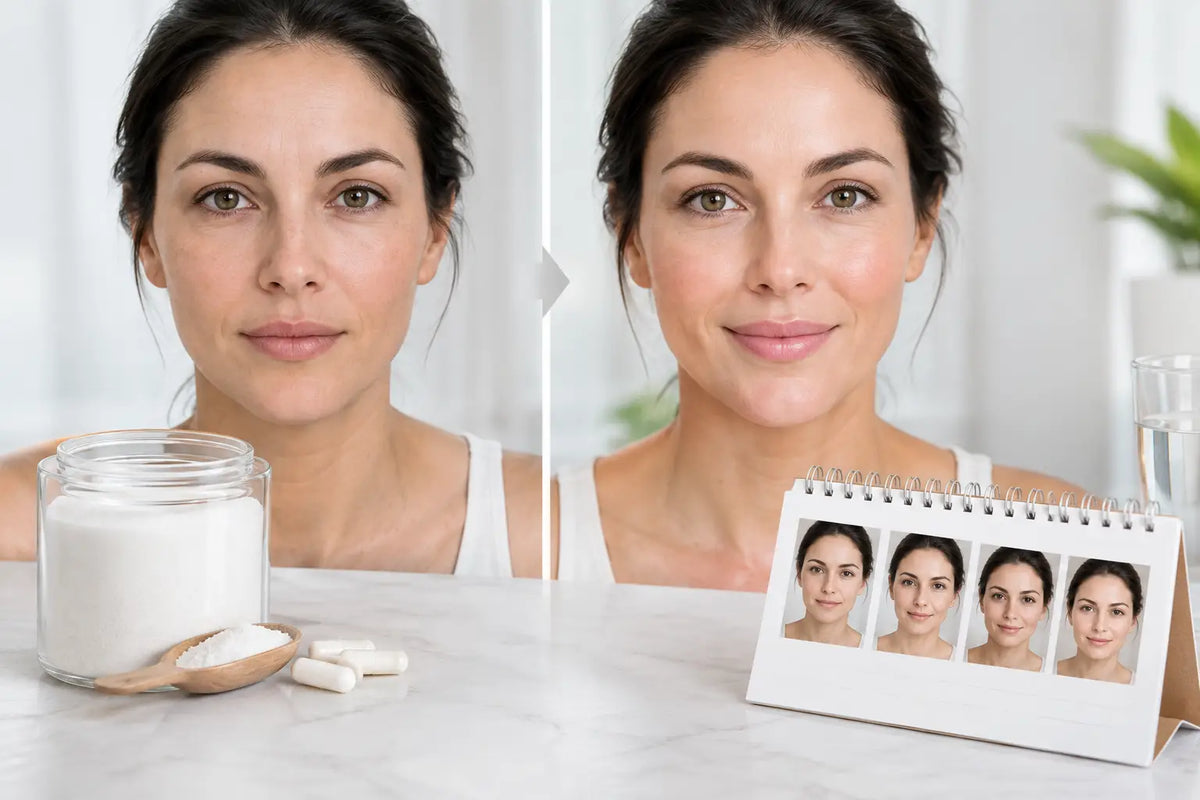
A collagen routine before and after example is most helpful when it shows the part people rarely post: the steady, ordinary middle. Not overnight glow-ups. Not a new routine that takes 45 minutes. Just small habits repeated long enough to notice how your skin, nails, hair, and daily comfort actually respond.
For many people, collagen fits best as a beauty-from-within support habit, not a miracle fix. Results can vary based on age, diet, sun exposure, stress, hormones, sleep, hydration, and the type and amount of collagen you use. The goal is not perfection. It is a simple reset you can follow without creating one more thing to manage.
What a realistic collagen routine can look like
Collagen is a protein found naturally in the body and in connective tissues. As we get older, natural collagen production changes, which is one reason skin may feel less bouncy or nails may become more prone to splitting. Collagen peptides are commonly used because they dissolve easily in drinks and are simple to take consistently.
A practical routine starts with one daily collagen habit, then supports it with the basics that help your body function well: enough protein, vitamin C-rich foods, water, sleep, and sun protection. You do not need an elaborate wellness schedule to make this useful.
For this example, imagine a busy professional in her late 30s. She wants skin that feels more hydrated, stronger nails, and a calmer morning routine. She uses an unflavored collagen peptide powder once a day and chooses one repeatable cue: adding it to her morning coffee or smoothie after breakfast.
Her routine also includes a protein-forward breakfast most days, fruit or vegetables with vitamin C, a water bottle at her desk, and SPF in the morning. These habits are not glamorous, but they create the kind of consistency that is easier to maintain when work, family, hormones, or life feels chaotic.
Collagen routine before and after example: a 12-week timeline
Before starting: create a calm baseline
Before day one, she takes a few photos in the same natural light: one close-up of her face, one of her hands and nails, and one of the back of her hair. She writes down what she notices without criticizing herself. Her skin sometimes feels tight by late afternoon. Two nails are peeling. Her hair is fine and sheds more during stressful weeks.
She also records what could affect the outcome. She has been sleeping about six hours a night, skipping lunch twice a week, and spending long stretches in dry office air. This context matters. If her skin changes, she wants to understand the whole picture rather than credit or blame one powder for everything.
Weeks 1-2: build the cue, not the expectation
The first two weeks are about remembering, not measuring. She uses collagen daily with breakfast and keeps it visible beside her mug and coffee supplies. If she misses a day, she simply resumes the next morning. No doubling up and no all-or-nothing thinking.
At this stage, she may notice nothing visible, and that is completely normal. Some people like the structure of a morning drink right away, while others notice a change in digestion or satiety depending on the product and the rest of their meal. If bloating, discomfort, or an unpleasant taste makes the routine hard to keep, it is worth adjusting the serving, timing, or format rather than forcing it.
Weeks 3-6: look for subtle, useful shifts
By the middle of the routine, the changes are often quieter than a dramatic before-and-after photo. In this example, her skin feels less tight after long workdays, especially when she has also been drinking water regularly. Her nails grow out with fewer rough edges, though one still splits after a stressful travel week.
She does not claim that every good day is collagen. Her sleep improves slightly, and she has been more consistent with breakfast. That is the point of tracking: it helps her notice patterns without turning wellness into a guessing game.
This is also when she checks whether the habit is realistic. Coffee works on office days, but on weekends she forgets. She decides to keep single servings in the kitchen and adds collagen to oatmeal or yogurt when she is not making coffee. A flexible routine is usually more sustainable than a rigid one.
Weeks 7-9: assess texture, strength, and consistency
Around two months, she compares new photos with her baseline. Her skin looks similar overall, but she feels that makeup sits more smoothly around her cheeks and her face feels more comfortable after cleansing. Her nails seem stronger as they grow, with fewer layers peeling at the tips.
Her hair has not transformed overnight, and she does not expect it to. Hair growth and shedding can be influenced by stress, iron status, thyroid health, postpartum changes, genetics, and hormonal shifts. Still, she notices that the short new growth around her hairline looks healthy and her hair feels less dry after styling. She records this as a personal observation, not a promise.
Weeks 10-12: decide what is worth keeping
At 12 weeks, the most meaningful after may be that the routine now feels easy. Her skin looks a little more rested in photos, her nails are less frustrating, and she has a dependable breakfast cue that helps her feel more organized in the morning.
The result is not a different face or a perfect life. It is a collection of small, visible and felt improvements supported by consistency. For her, that is enough reason to continue. Someone else may see different changes, or decide collagen is not the right fit for their goals or budget. Both outcomes are useful information.
The simple routine behind better follow-through
A collagen habit works best when it has a home in your day. Instead of relying on motivation, connect it to something you already do. Your routine might be as simple as this:
- Take your chosen collagen serving with coffee, tea, a smoothie, yogurt, or oatmeal.
- Include a vitamin C food during the day, such as berries, citrus, peppers, broccoli, or kiwi.
- Drink water consistently, especially if indoor heat, workouts, or caffeine leave you feeling dry.
- Apply sunscreen each morning to support your skin from the outside, too.
How to track your own before and after without obsessing
Photos are useful, but they are not the only evidence. Take them every four weeks in the same place, at roughly the same time of day, without filters. Then add a short weekly check-in: How does my skin feel after cleansing? Are my nails peeling or breaking less? Has my routine been easy to follow? Do I feel any digestive discomfort?
Avoid checking the mirror for proof every morning. Daily changes are influenced by salt intake, sleep, your cycle, weather, and stress. A monthly comparison gives you more perspective and helps you stay kind to yourself in the process.
If you are pregnant, breastfeeding, managing a medical condition, taking medication, or have food allergies, check with a qualified healthcare professional before adding a supplement. Choose a product with ingredients that fit your needs, and remember that animal-derived collagen is not suitable for vegans or vegetarians.
When your results look different than expected
If you have used collagen consistently for several months and notice no meaningful difference, that does not mean you failed. It may mean your biggest need is elsewhere: more sleep, a dermatologist’s guidance, treatment for a nutrient deficiency, a better hair-care routine, or support for stress that has been running the show.
NATFUL believes the most supportive routine is the one that makes real life feel more manageable. Let collagen be one small act of care, not another standard you have to meet. A few steady minutes each morning can be a quiet reminder that feeling more like yourself is worth making room for.


Leave a comment
This site is protected by hCaptcha and the hCaptcha Privacy Policy and Terms of Service apply.