
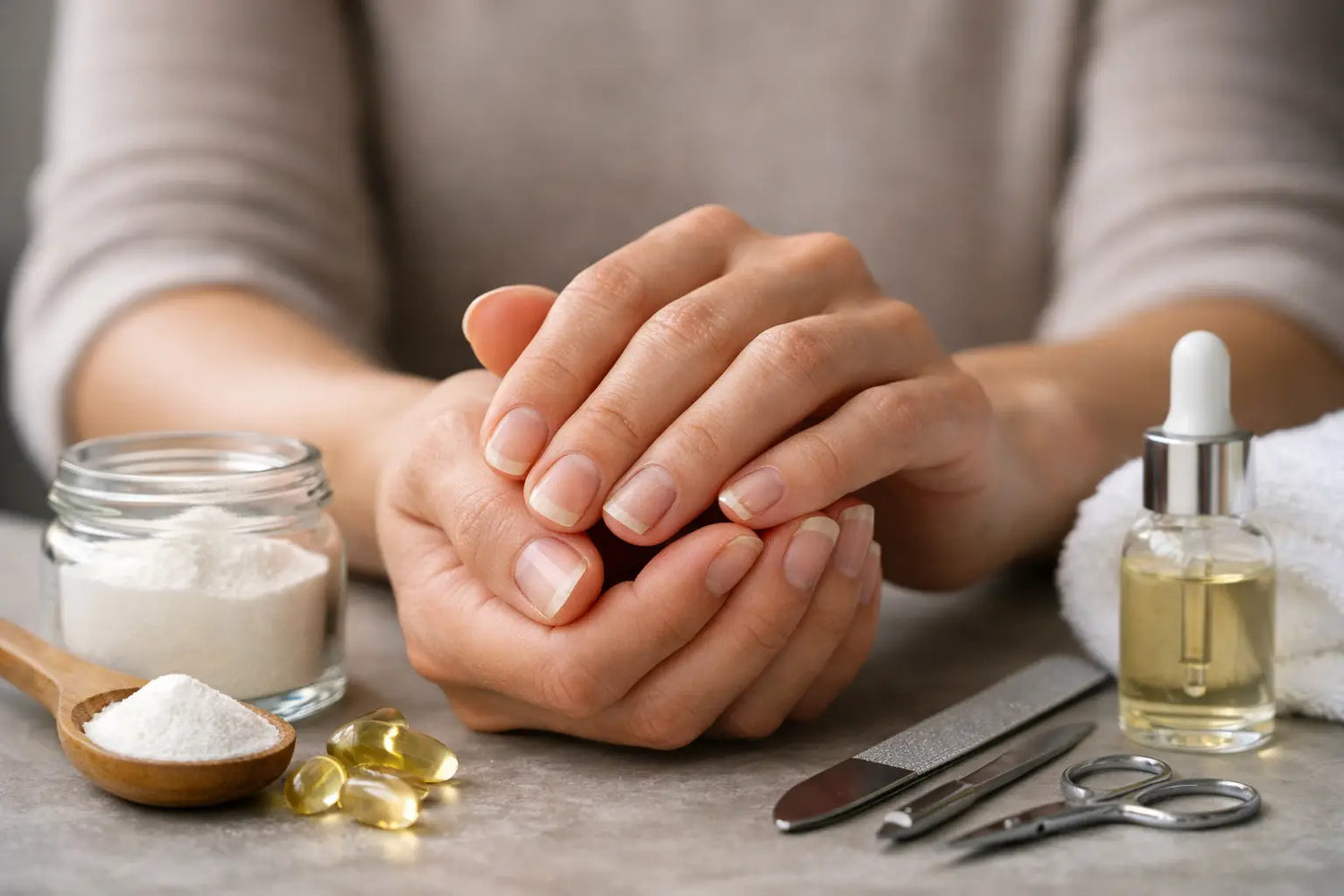
A split or peeling nail can feel like a tiny thing until it catches on your sweater, breaks below the quick, or makes a fresh manicure last two days. If you are wondering, does collagen help brittle nails, the short answer is: it may help some people, but it is not a fast fix or a guarantee.
Collagen can be a useful part of a beauty-from-within routine, especially when nail breakage is tied to everyday wear, low protein intake, or a season of stress and inconsistent self-care. But strong nails also depend on hydration, nutrition, gentle habits, and sometimes a closer look at your health. The goal is not to add another complicated rule. It is to build a simple routine you can actually keep.
Does collagen help brittle nails?
Collagen is a protein found naturally in the body. Your body breaks a collagen supplement down into amino acids and peptides during digestion, then uses those building blocks where they are needed. It does not travel straight to your nails like a targeted treatment, which is why results can vary from person to person.
Your nails are made primarily of keratin, not collagen. Still, collagen provides amino acids that support the body’s overall protein supply and connective tissues around the nail. For some people, that extra support may translate to less splitting, better growth, or nails that feel less flimsy over time.
The evidence is promising but limited. One small study of women taking 2.5 grams of specific collagen peptides daily for 24 weeks found faster nail growth and fewer broken nails. Participants also reported improvements that lasted for several weeks after stopping. That is encouraging, but it was a small study, not proof that every collagen powder or gummy will produce the same result.
Think of collagen as a supportive habit, not a rescue treatment. If your nails have been brittle for years, the cause may be more complex than a collagen gap alone.
What collagen can and cannot do for nails
Collagen is most likely to be helpful when it fills a real nutritional or routine gap. If your meals are rushed, protein is an afterthought, or you are recovering from a period when caring for yourself fell to the bottom of the list, a consistent collagen habit can be an easy reset point.
It may be less noticeable if your nails are damaged mainly by frequent acetone use, gel removal, harsh cleaning products, handwashing, or picking. In those cases, the outside of the nail needs protection as much as the inside needs nourishment.
It also cannot replace treatment for an underlying medical issue. Sudden nail changes, deep ridges, spoon-shaped nails, discoloration, pain, or nails lifting away from the nail bed deserve attention from a clinician. Iron deficiency, thyroid conditions, skin conditions, infections, and some medications can all affect nail strength.
How long does collagen take to help brittle nails?
Nails grow slowly, so patience is part of the plan. Fingernails generally take several months to fully grow out. If collagen helps you, you may notice fewer fresh breaks or slightly firmer new growth after eight to twelve weeks of daily use. More meaningful change can take three to six months.
This is where many routines fall apart. It is easy to try a supplement for two weeks, see no dramatic change, and move on. A better approach is to choose one format you enjoy, take it consistently, and track one or two simple signals: how often your nails split and how far you can grow them before a break.
A simple routine for stronger-looking nails
You do not need a 12-step beauty regimen to give your nails more support. Start with four steady habits that work together.
- Use collagen consistently. Follow the serving directions on your chosen product. Many studies on nail benefits used around 2.5 grams of collagen peptides daily, but product formulas vary. Powder stirred into coffee, a smoothie, or oatmeal is often easier to remember than a separate task.
- Build protein into real meals. Collagen should complement, not replace, a varied protein intake. Eggs, Greek yogurt, fish, poultry, beans, tofu, lentils, and nuts all contribute amino acids that support normal nail growth. A practical goal is to include a protein source at breakfast and lunch, not just dinner.
- Protect the nail plate. Wear gloves for dishes and cleaning, use a moisturizing hand cream after washing, and apply cuticle oil at night if your skin feels dry. Keep nails at a manageable length while they grow out. File in one direction instead of aggressively sawing back and forth.
- Take a break from damage cycles. Repeated gel manicures, peeling off polish, and frequent acetone exposure can leave nails thin and rough. You do not have to give up polished nails forever. Even a few weeks of gentler care between manicures can help you see what your natural nails are capable of.
Choosing a collagen supplement without the overwhelm
Collagen peptides, often labeled hydrolyzed collagen, are broken into smaller pieces for easier mixing and digestion. For a straightforward nail-focused routine, choose a product with a clear serving size and a short ingredient list. Unflavored powder can be especially flexible if you are sensitive to sweetness or want to avoid turning another wellness habit into a decision.
Bovine collagen is common and typically provides types I and III collagen. Marine collagen is another option, though it may cost more and is not suitable for people with fish allergies. Vegan products cannot provide true collagen from plants, but some contain nutrients intended to support the body’s own collagen production. Their benefits are different, so read claims carefully.
Quality matters more than fancy packaging. Look for transparent labeling and testing practices when available. If you are pregnant, breastfeeding, managing a health condition, or taking medication, check with your healthcare professional before starting a new supplement.
When brittle nails need more than collagen
Brittle nails are common, particularly with age, dry weather, frequent handwashing, and hands-on work. But persistent breakage can be your body asking for more support. Consider booking an appointment if changes are sudden, severe, or accompanied by fatigue, hair shedding, unexplained weight changes, cold intolerance, or skin symptoms.
Avoid self-prescribing high-dose biotin just because it is marketed for hair and nails. Biotin may interfere with certain lab tests, including some thyroid and heart-related tests. If you take it, tell your healthcare team before blood work. A clinician can help determine whether checking iron, thyroid function, or other factors makes sense for you.
You deserve a routine that feels calming, not like one more project to manage. Collagen may be one helpful piece for brittle nails, but the real-life results come from pairing it with enough nourishment, gentler nail care, and the consistency to let new growth show up.



Leave a comment
This site is protected by hCaptcha and the hCaptcha Privacy Policy and Terms of Service apply.