

Before you check a notification, answer a question, or replay yesterday’s conversation, your nervous system may already be bracing for the day. A morning reset for anxious adults is not about becoming perfectly calm before 8 a.m. It is a short, repeatable way to show your mind and body: you are safe enough to begin.
For many busy adults, anxiety arrives before the coffee is ready. It can look like a tight chest, a scrolling habit you cannot seem to stop, irritation with your family, or a mental to-do list that starts running at full speed. The goal is not to force those feelings away. The goal is to lower the volume enough that you can choose your next move instead of reacting to every thought.
Why anxious mornings feel so intense
Your brain wakes up ready to scan for what needs attention. When you are already stressed, underslept, managing hormones, parenting, working under pressure, or carrying too much invisible labor, that scan can turn into threat mode quickly. A calendar alert feels urgent. A cluttered kitchen feels like proof that you are behind. One anxious thought creates five more.
That is why a useful reset starts with your body, not a motivational speech. You do not need to think your way out of a nervous system that feels activated. First, give it a few signals of steadiness: light, water, food, movement, breath, and fewer inputs. Then make a simple plan for the day in front of you.
This does not mean every morning will feel peaceful. Some seasons are genuinely demanding, and anxiety can be a health concern that deserves professional support. But a supportive routine can create a small buffer between waking up and being pulled in ten directions.
The 15-minute morning reset for anxious adults
Think of this as a menu, not a test. If you have fifteen minutes, move through the full reset. If you have three, choose the first two steps. Consistency matters more than doing every piece perfectly.
1. Delay the input for five minutes
If your phone is your alarm, it is understandable that it ends up in your hand. Still, try to avoid opening messages, news, social media, or email right away. Those apps invite your brain to solve other people’s needs before you have checked in with your own.
Put both feet on the floor and name what is true in the room. You might quietly say, “It is morning. I am in my bedroom. I have one thing to do at a time.” This can feel almost too simple, but it interrupts the fast jump from waking to worrying.
If you need your phone for practical reasons, set a five-minute timer and use it only for that. A small boundary is more realistic than promising yourself you will never look at your phone before breakfast.
2. Give your body basic signals of safety
Open the blinds, step onto a porch, or stand near a window for a minute or two. Morning light helps your body recognize that the day has begun, which can support a more settled sleep-wake rhythm over time. Then drink a glass of water before your second coffee.
Next, use a breathing pattern that feels comfortable rather than forced. Try inhaling gently for four counts and exhaling for six. Do that for five rounds. A longer exhale can help soften the physical urgency that often comes with anxiety.
If focused breathing makes you feel more aware of uncomfortable sensations, skip it. Try humming while you make tea, placing a hand over your chest, or splashing cool water on your face instead. The best calming tool is the one you will actually use without adding stress.
3. Eat for steadier energy, not perfection
An anxious morning can become shakier when you run on caffeine alone. You do not need a picture-perfect wellness breakfast. You need something easy that gives your body enough fuel to think, move, and regulate.
Aim for a simple combination of protein, fiber, and satisfying carbohydrates. Greek yogurt with fruit and nuts, eggs with toast, oatmeal with nut butter, or a smoothie with protein and berries can all work. If mornings are chaotic, prep one or two dependable options you can grab without thinking.
This is especially worth noticing if you feel jittery, irritable, foggy, or unusually panicked by late morning. Caffeine affects everyone differently. You may not need to give it up, but having it after food or reducing the amount during high-stress weeks can make a noticeable difference.
4. Move the stress through, gently
You do not need an intense workout to earn a calmer day. In fact, when you are exhausted or highly activated, demanding exercise can feel like another item to fail at. Two to ten minutes of gentle movement is enough to change your state.
Walk around the block, stretch your shoulders and hips, dance while you get dressed, or do a few slow squats while the kettle boils. Choose movement that makes you feel more present in your body, not punished by it.
For neurodivergent adults or anyone who wakes up with sensory overload, repetitive movement can be especially helpful. Try pacing, rocking, a short walk without headphones, or pressing your feet firmly into the floor. These are practical ways to release some of the energy that anxiety can trap in the body.
5. Make the day smaller on paper
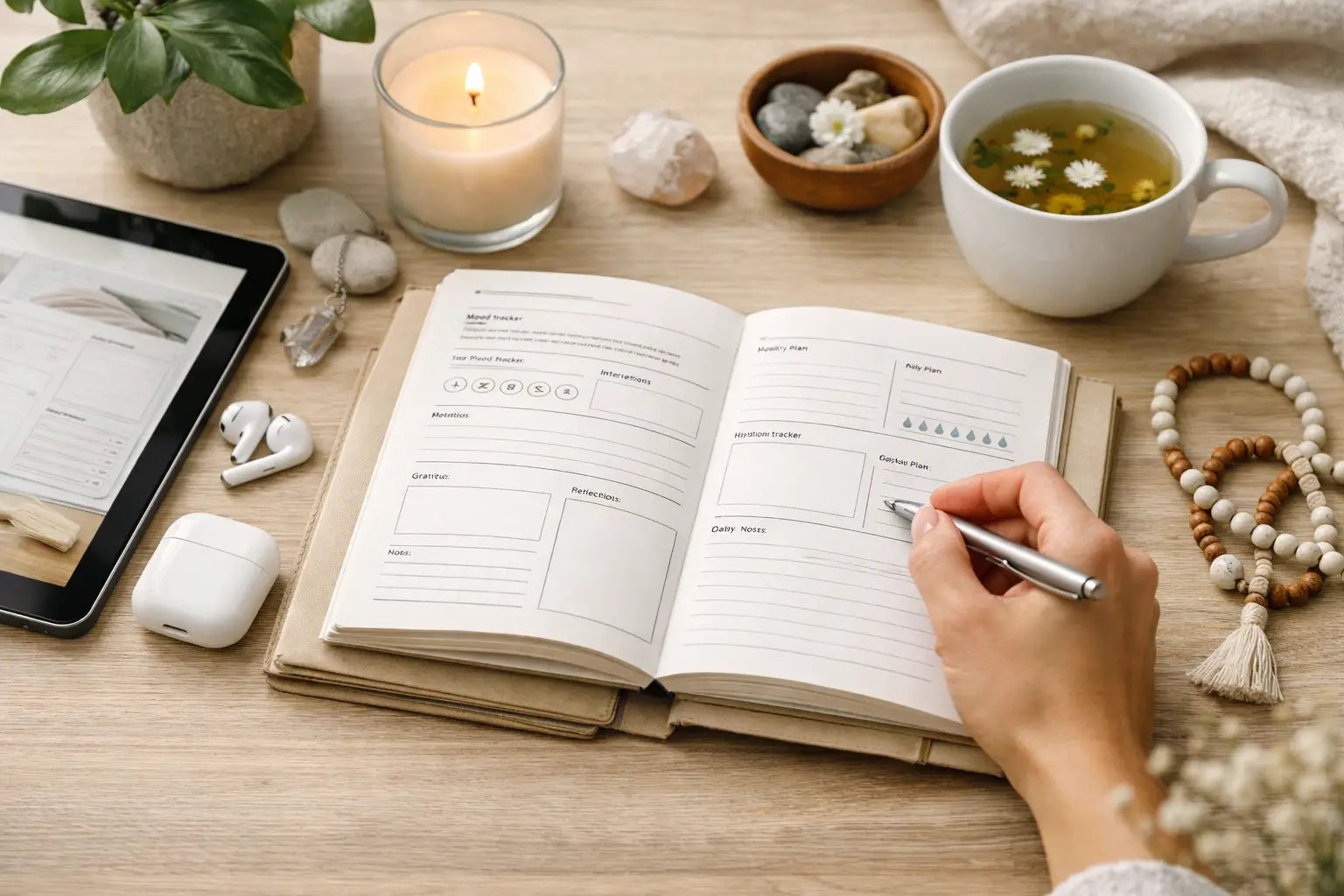
A crowded mind needs somewhere to put its thoughts. Take two minutes with a notebook or notes app and write three lines: what is worrying you, what truly needs to happen today, and what can wait.
Then choose one priority that would make the day feel meaningfully easier. Not ten priorities. One. It could be sending a message you have delayed, booking an appointment, making dinner simpler, or finishing one work task before noon.
This step matters because anxiety often treats every task as equally urgent. A short written plan gives your brain proof that there is a container for the day. You are not ignoring your responsibilities. You are organizing them in a way your nervous system can handle.
Create a reset that fits real mornings
The most effective routine is not the longest one. It is the one that still works after a bad night, a sick child, an early meeting, or a week when your motivation disappears. Build a minimum version first.
Your minimum reset might be: open the blinds, drink water, eat something with protein, and write down one next step. That can take less than seven minutes. Once it feels automatic, add a walk, a few stretches, a longer journal entry, or a skincare ritual that helps you feel cared for.
It also helps to reduce friction the night before. Put a water glass by the sink. Keep a notebook where you make coffee. Set out breakfast ingredients. Place your phone across the room if scrolling is your biggest trigger. These small decisions are not glamorous, but they protect your energy when you have the least of it.
When a morning routine is not enough
A reset is a support tool, not a replacement for care. If anxiety is making it hard to sleep, work, eat, parent, leave the house, or feel safe, reaching out to a licensed mental health professional is a strong next step. If you are experiencing thoughts of harming yourself or feel in immediate danger, contact emergency services or a crisis resource right away.
You also do not need to wait for a crisis to ask for help. Therapy, medical guidance, and practical support from people you trust can work alongside your routine. The point is not to prove you can handle everything alone. It is to build a life with more support and fewer moments of white-knuckling your way through the day.
Tomorrow morning, do not ask yourself to become a new person before breakfast. Open the light, take a breath, fuel your body, and choose one next step. A calmer day does not always begin with a big transformation. Often, it begins with a small moment of care that tells you that you are worth tending to, too.


Leave a comment
This site is protected by hCaptcha and the hCaptcha Privacy Policy and Terms of Service apply.